Tampilkan postingan dengan label Rita Tushingham. Tampilkan semua postingan

Jumat, 25 November 2011

A Taste Of Honey - Shelagh Delaney, R.I.P.

I had been meaning to write about A TASTE OF HONEY, but the death of its writer Shelagh Delaney (1938-2011) has prompted this review. Delaney and Tony Richardson below:


The late '50s and early '60s saw the arrival of kitchen sink drama in England — gritty Northern industrial landscapes shot in moody black and white, which tied with the Nouvelle Vague in France and Italy's new wave too, those successful films, from plays and books, like Jack Clayton's ROOM AT THE TOP, Reisz's SATURDAY NIGHT AND SUNDAY MORNING, Tony Richardson's LOOK BACK IN ANGER. A TASTE OF HONEY too was a sensational play, both in London and Broadway (where Angela Lansbury played the feckless mother). The original play was written by 18-year-old Shelagh Delaney in 1958, as a riposte to the theate of the time, those plays by Terence Rattigan as she had seen some and thought she could do better, so A TASTE OF HONEY was like a breath of fresh air, and remains a much loved film.
The 1961 film was X-rated. Set in Salford, the tale of Jo(sephine), a lonely, neglected teenager, tackled teenage pregnancy, mixed-race relationships and feckless parenting (by Dora Bryan and her dodgy boyfriend Robert Stephens). The most sympathetic character is Jo’s gay friend, Geoff, at a time when homosexuality was criminal. Murray Melvin had worked his way up from tea boy at Joan Littlewood’s famous Theatre Workshop Company at London’s Stratford East Theatre to play the role of Geoff on stage, reprising it in the film. Similarly, Tushingham had joined the Liverpool Rep as a backstage odd job girl after writing many pestering letters.


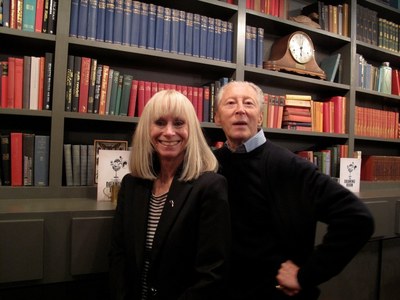
Tushingham also starred in some cult favourites of mine like the Swinging London parody, SMASHING TIME, with her pal Lynn Redgrave (from THE GIRL WITH GREEN EYES), Richard Lester's THE KNACK and others and is still working as is Murray Melvin, who probably played the first smpathetic gay character most of us saw at the cinema. It is always a pleasure to see him in films like THE BOYFRIEND or BARRY LYNDON, below: he and Rita recently.

Tushingham (who has a great website covering her extensive career) says of the early ‘60s: ‘It was a welcoming time. There was an energy. We need to do more to encourage young people to discover what’s inside them. The consumerism is not the point… 50 years on we still have the same emotions as we did then, but we are being sold more.’


Dirk Bogarde's VICTIM was also a key movie that year of course, I particularly like A TASTE OF HONEY with its lyrical moments among the working class background of Salford - a vanished landscape now. Dora Bryan is marvellous as the mother with her constant moolight flits (leaving lodgings without paying rent) and who returns to look after Jo in her pregnancy because she has nowhere else to go, thus forcing out Geoff, the sad little gay boy who does not fit in. It is extremely touching. Richardson directs with a sure hand with that marvellous black and white photography by Walter Lassally, it is a perfect Woodfall film. John Schlesinger then provided two more Northern classics in A KIND OF LOVING in 1962 and BILLY LIAR in 1963 which really ushers in the new Swinging London era with Julie Christie heading off to London leaving dreamer Billy behind at the railway station .... I really want to re-see those again now too. Two Edna O'Brien adaptations by Desmond Davis continued the trend: Woodfall's THE GIRL WITH GREEN EYES, Tushingham with Peter Finch, in 1964 and I WAS HAPPY HERE with Sarah Miles in 1966, by which time Swinging London was all the rage.

Shelagh Delaney continued to write but never equalled her early success. She also scripted THE WHITE BUS for Lindsay Anderson, CHARLIE BUBBLES for Albert Finney among others.

Rabu, 20 Juli 2011

A steamy slice of Italian grand guignol from 1977

GRAN BOLLITO. A very oddball concoction by that Italian master of costume and period dramas, Mauro Bolognini, in 1977.


Shelley Winters is the very possessive mother of a grown son (whom she dries naked from the bath) so she is going to resent his interest in the lovely Laura Antonelli (from Visconti’s L’INNOCENTE). They are new tenants in an apartment block housing some very strange middle aged ladies – who are all played in men in drag, but not in a camp way. If you thought his Ming the Merciless (FLASH GORDON) was ultra-camp, Max Von Sydow in drag as a fluttery middle-aged spinster is a sight to see (Max also appears as himself later as the detective on the case of the murdered “females”). It is quickly revealed that the malevolent mother has murderous intentions – she lost so many babies in childbirth that she has made a pact with death to allow her son to live, and in return, she will provide many victims for death. Her kitchen with its table and all those saws and hammers and the big pot on the stove is suitably gruesome, as are the scenes where the victims are despatched, and turned into soap or ground into flour for biscuits, which are eaten by their friends.

Shelley relishes the grand guignol as she has visions of the apocalypse to come (it is 1938 Italy). Rita Tushingham is also on hand, as the invalid who finds her friend’s ring in a bar of soap! The title might roughly translate as “The Big Stew”.

Bolognini crafted some marvellous costume dramas in the '70s like METELLO (pop singer Massimo Ranieri) and THE INHERITANCE with Anthony Quinn, Dominique Sanda and Fabio Testi.

Kamis, 14 April 2011

Perfectly '60s (5): Mulberry Bush & Smashing Time

A final look at those swinging '60s for now - another look at Clive Donner's 1968 HERE WE GO ROUND THE MULBERRY BUSH, and Desmond Davis' 1967 SMASHING TIME, re-uniting Rita Tushingham and Lynn Redgrave as Brenda and Yvonne, two gormless girls down from the North of England to swinging London - Kings Cross and Camden to be precise. London doesn't quite swing for them just yet though, but Yvonne soon becomes a pop star spending all her money on being famous. It is all very colourful with some slapstick and nice humour and nicely cast too with Michael York (a photographer, of course), Irene Handl, Anna Quayle (and her "Too Much" boutique) where Rita's pals like Murray Melvin from A TASTE OF HONEY hang out. More on this at previous label.


I was 21 when HERE WE GO ROUND THE MULBERRY BUSH happened and its great fun seeing it again now. The girls include Judy Geeson (who does not pass her exams because she is sleeping around), Angela Scoular as the posh one, Adrienne Posta hilarious as the chip shop girl, Vanessa Howard and others. There are also the young Christopher Timothy, Nicky Henson and all those fashions. Denholm Elliot and Maxine Audley preside over a swinging weekend, while Michael Bates and Moyra Fraser are our hero's parents at their modest home in that swinging hot spot: Stevenage New Town - one of those '60s new towns. Clive Donner keeps it swinging after his successes with NOTHING BUT THE BEST and the madcap favourite WHAT'S NEW PUSSYCAT?


Barry Evans is our hero, and he is charming here [one of mainstream cinema's first male nudes too] - but his is one of show business's unluckier stories - he went on to a bit part in Donner's ALFRED THE GREAT and then television beckoned with sitcoms like DOCTOR IN THE HOUSE and MIND YOUR LANGUAGE - and then ADVENTURES OF A TAXI DRIVER one of those tatty early '70s soft core rubbish movies that the British film industry was reduced to. Barry became a taxi driver in real life and died in mysterious circumstances aged 53 in 1997.

There is now though a new BFI dvd, so one can relive those colourful 60s fashions and those songs by Stevie Winwood and Traffic all over again. Being 21 when this was released it was like it spoke to my best friend Stan and I - we were like the young people up there on the screen...

Now though we "read" the British '60s through the films of Schlesinger and Losey, Richardson and Reisz, the colourful capers of Clive Donner or Michael Winner, Richard Lester's zaniness, Desmond Davis's romantic dramas, the different views of visitors like Antonioni, Polanski, Skolimowski and films as diverse as THE KNACK, DARLING, POOR COW, UP THE JUNCTION, DEEP END, THE JOKERS, THE SYSTEM, I'LL NEVER FORGET WHATSISNAME, WEST 11, THE WORLD TEN TIMES OVER - but everyday movie fare back then included the CARRY ONs, the Hammer horrors, all that various exploitation fare which all peaked in the 70s - as lovingly recalled in the book "Shepperton Babylon" by Matthew Sweet.

Selasa, 12 April 2011

Perfectly '60s (3): Rita, Lynn and Sarah too


Two perfect mid-60s British black and white romantic dramas set in Ireland - both from Edna O'Brien stories, and both directed by Desmond Davis are 1964's THE GIRL WITH GREEN EYES and I WAS HAPPY HERE in 1966, starring Sarah Miles (a world away from her other overblown Irish romance for David Lean). I have written about these here before (Sarah Miles label and 1960s label). They do though make a perfect double bill. O'Brien's theme in both is the passage of love as her Irish country girls love and lose and set up new lives in London.


This was very relevant for me being Irish and new in London too then, as Miles goes back to her Irish village [Liscanor and Lahinch in Co Clare] and Rita and Lynn (wonderful as the feckless Baba) have their adventures in '60s Dublin as Tush is romanced by wordly older man Peter Finch (sterling, as ever). It [THE GIRL WITH GREEN EYES] ends with the girls on the night ferry from Dun Laoghaire to England - a trip I did myself many times - and shows us Rita's new life in London - she works at the WH Smith shop in Notting Hill Gate just across from the Classic Cinema (above) - an old haunt of mine! whereas Sarah also ends up wiser .... both are perfect small films that pays re-viewing. Sarah went on to Antonioni's BLOW-UP (which according to her memoirs was not a happy experience for her) and then back to Ireland - Kerry this time - for the protracted shoot on RYAN'S DAUGHTER, released in 1970. Rita had the smash hit of Lester's THE KNACK among others, and she and Lynn teamed again to great comic effect in Desmond Davis's SMASHING TIME, great fun in 1968,as per reviews at labels.

Rabu, 14 Juli 2010

London in the movies ...

... A PERSONAL CHOICE.

POOL OF LONDON - an Ealing Michael Balcon production from 1951. Let's start with a quartet from that reliable duo producer Michael Relph and director Basil Dearden. POOL OF LONDON's backdrop is the stark, bomb-site ridden City of London, centred round the old docks by Tower Bridge, fascinating to see how as all this area has been pulled down and re-developed. In fact the ship our heroes are on must be moored where City Hall is now. The film is full of faces of the time and those two leads Bonar Colleano and Earl Cameron are so redolent of the early 50s. Colleano was in several British films (including THE WAY TO THE STARS in '44, and died in a car crash in '58 (as did Dearden in '71); Cameron may be the first black actor regularly employed in British cinema and is still working now, he is in INCEPTION). Colleano was actually married to Susan Shaw, who is paired with Cameron here - rather odd seeing them together now, as there couldn't have been many coloured (as they are referred to here) men in London in the early '50s, as it was not until the late '50s that blacks were recruited from Trinidad and Jamaica to move to England, causing those race riots of the time, as explored in films like SAPPHIRE and FLAME IN THE STREETS. Plot-wise this is a neat thriller showing the strict customs control of the time as the sailors try to smuggle nylons and cigarettes for their lady friends. Colleano dabbles in smuggling but gets in over his head when asked to take some hot diamonds on board the ship and deliver them to Rotterdam. The robbery is nicely plotted featuring Max Adrian (whom I knew from his later Ken Russell films) as a run-down variety trapeze artist, who unfortunately kills the night-watchman at the office where the diamonds are. The usually posh Moira Lister is fun as the good time girl who persuades Bonar to keep the diamonds which he gives to Cameron to take on board the ship for him as it all unravels. An entertaining caper then, capturing the bombed-out City of London before all that redevelopment began, with trams and run-down variety theatres. Thank goodness it was all going to change...

1954 saw Gerard Philipe as that romantic Frenchman on the loose in London in KNAVE OF HEARTS (Monsieur Ripois), romancing the likes of lovely Joan Greenwood - Rene Clement shot exteriors on the streets of London with (mostly) hidden cameras, 5 years before the New Wave! It shows a nicely atmospheric London of the time, including that nice streetwalker who takes our suddenly homeless hero home!

SAPPHIRE. Hardly ever seen now, this is a vivid childhood memory. Basil Dearden’s 1959 thriller is very colourful as it depicts the casual racism of late ‘50s Britain and the racial tensions of the time, with the arrival of those immigrants from Jamaica and Trinidad who were encouraged to move to England and better themselves, but were usually working on buses and trains. Sapphire is the girl found murdered on Hampstead Heath as detectives Nigel Patrick (dependable as ever) and Michael Craig look for clues. Yvonne Mitchell scores as the sister of Sapphire’s boyfriend, as it is revealed that the murdered girl was a half-caste who was passing as white, as her brother Earl Cameron makes obvious. As in Dearden’s following VICTIM, attitudes are revealed among the suspects and its intriguingly worked out. A vivid scene set in a nightclub shows Craig’s reaction while watching a blond girl absorbed in the music as the owner tells the police that the girls passing for white always give themselves away when they hear that funky beat…. FLAME IN THE STREETS in 1961 is another set in this era as John Mills’ daughter (Sylvia Syms again) wants to marry an ordinary black man (not a Sidney Poitier superhero, as in Kramer's 1967 film) thus testing his liberal attitudes, while his wife, splendid Brenda de Banzie, is violently opposed to the union. This is also by Ted Willis. We see Hampstead Heath of the time and those various London locations like Notting Hill.


VICTIM - Dearden's 1961 follow-up is very well known now and gets re-discovered all the time, and again the thriller format is used to demonstrate attitudes to homosexuality while it was still illegal (until 1967) so blackmailers had a field day. Dirk Bogarde is the barrister who decides to unmask them, after the boy he was seeing (Peter McEnery) kills himself after being blackmailed. Sylvia Syms is the not very understanding wife, Dennis Price is amusing as one of those blackmailed, and we get to see the regulars of that famous gay bar The Salisbury in St Martin's Lane. London theatreland is also on view with shots of the Palace (showing 'Flower Drum Song') and the St Martins Lane theatre (where 'Oliver' is playing) and that bookshop must be in Cecil Court off Charing Cross Road. A quaint (now) but still richly rewarding British noir, as well as a historically significant one as apparantly it helped to change the law de-criminalising homosexuality in the U.K.

THE LEATHER BOYS in 1964 features the bikers seen around London and the North Circular Road, Rita Tushingham is a shrewish wife here, driving her husband into the arms of those leather bikers.

'50s London is on view in popular movies showing the upper classes as in INDISCREET or THE RELUCTANT DEBUTANTE. We have Gary Cooper in the Waterloo Station of 50 years ago in THE WRECK OF THE MARY DEARE, and Sophia Loren on the London Bridge skyline of 1960 in THE MILLIONAIRESS - its totally different now! More posh London featured in I COULD GO ON SINGING with its Harley Street surgeries and the London Palladium where Judy sings, and of course Bogarde again in Losey's THE SERVANT and that fabulous house in Royal Walk, off the Kings Road in Chelsea.

A PLACE TO GO - Kitchen sink movies must have come to a screaming halt with this Dearden movie from 1963 which was lost for decades and one can see why now that it is available again. It plays like a parody of kitchen sink dramas as we focus on Bethnal Green and working class families being moved to those enticing new high rise blocks. It is a rather patronising look at working class life with pub singalongs, dog tracks and the like. There is of course a dissatisfied young man - the 5-minute pop star Mike Sarne, surely the most uncharismatic leading man ever, his spikey waif girlfriend - who else but Rita Tushingham? and his salt of the earth working class parents - send for reliables Doris Hare and Bernard Lee. There is of course a raid on the local cigarette factory that goes wrong, and at the end those slum houses are being demolished at they move to the tower blocks.

And of course in 1964's GIRL WITH GREEN EYES, Irish Rita Tushingham (right) takes the ferry to London and works at the WH Smith shop just oppostite the Notting Hill Classic Cinema, one of my old haunts - and I took the ferry that same year, arriving on 11th April 1964! while in 1966, another Irish girl Sarah Miles mopes in her London bedsitter (with its topical view of the new Post Office Tower) in I WAS HAPPY HERE (also written by Edna O'Brien and directed by Desmond Davis) while pining for her lost love back in County Clare in Ireland, where she runs to follwed by her husband. It too shows a very mid-60s London, before the hip people took over.

London got more colorful and entertaining as the '60s progressed: NOTHING BUT THE BEST with Alan Bates on the make, Rita again in Lester's THE KNACK with Michael Crawford, Michael Winner's romps THE JOKERS and I'LL NEVER FORGET WHATSHISNAME (Oliver Reed, Carol White, Marianne Faithfull etc). THE '60s movie of course was BLOW-UP as Antonioni re-imagined the city and the parks [Maryon Park in Woolwich] and the studios [in Notting Hill Gate], just as Polanski gave us a different view of Kensington in REPULSION, and Polish director Skolimowski showed us another East End in DEEP END.


SMASHING TIME was a marvellous slapstick romp in 1967, another essential Swinging Lodon comedy, as Northern girls Rita Tushingham (it was certainly her decade) and Lynn Redgrave arrive at the old St Pancras Station, to find out where it's at. Soon they discover Anna Quayle's "Too Much" boutique, and that custard pie shop and of course the Post Office Tower.


OTLEY in 1968, one of those Swinging 60s spy spoofs has a hapless Tom Courtenay mistaken for a spy. Romy Schneider pops in and out as a mysterious lady – it was fun seeing it again recently and those 60s locations like Notting Hill and Portobello that I knew well at the time. There is also a good Antonioni joke at an intellectual party. Amusing support from the likes of Alan Badel, Leonard Rossiter and James Villiers. Above: a tense comedy shoot-out at Notting Hill Gate underground station.
Badel was also that very suave Arab villain in Donen's ARABESQUE a feast of mid-60s London locations as Greg Peck and Sophia Loren try to crack a code in time. Its a dazzling entertainment just as good as Donen's CHARADE.

Late '60s London features in Roeg & Cammell's PERFORMANCE in Notting Hill and Mike Sarne crops up again with JOANNA, [he also went on to direct Fox's MYRA BRECKINRDIGE, amusing for some...]. UP THE JUNCTION in '68 is fascinating now to see the open spaces around Victoria Station and Chelsea Bridge - which is all high-rise apartments now.


Then came SUNDAY BLOODY SUNDAY in 1971, Schlesinger’s enduring film about a particular slice of London society, the intelligentsia and how they spend their Sundays, as devised by writer Penelope Gilliatt, is perhaps THE London movie of the '70s. Finch excels himself as Dr Daniel Hirsch, the Jewish doctor in love with young artist Murray Head, as is Glenda Jackson in one of her most sympathetic roles as the career woman realising her romance is not going anywhere. Their backgrounds are carefully shown while we do not learn much about the young artist – in fact the puzzle is why would two such well rounded people bother with someone so shallow. Finch has a great scene at the all-night chemist in Piccadilly watching the addicts waiting for their fixes after meeting a previous pickup of his, Jon Finch, while Glenda grimaces as she drinks instant coffee made from the hot water tap and grinds cigarette ash into the carpet as she is left with the toucan. Finch who replaced Ian Bannen in the role should really have won every award going [as should have Bogarde the previous year for DEATH IN VENICE] if only for that speech to the camera at the end, but it was Gene Hackman’s year. IMDB has quite a lot on its making and that famous gay kiss in its material about the film. Like THE GO-BETWEEN it was one of the year's must-sees.

The modern London of now is of course well-caught in a wide variety of films like 28 DAYS LATER and DIRTY PRETTY THINGS. Perhaps Paris and Rome soon ?