Tampilkan postingan dengan label Italian. Tampilkan semua postingan

Jumat, 27 Januari 2012

Marcello & Romy ! !


Another new Italian discovery: I hadn't realised that Romy Schneider and Marcello Mastroianni had teamed up for FANTASMA D'AMORE in 1981, one of her last films, the year before her death in '82. This is another one we were denied in London, though surely there would have been an audience for it then when the art circuit was still going and international stars like these were still popular ... I have now though seen some scenes from this Dino Risi drama on YouTube and have ordered an Italian only dvd,so a full report in due course ...

Kamis, 26 Januari 2012

Riso Amaro (Bitter Rice) 1949

Finally, the great Italian drama from 1949 - RISO AMARO, or BITTER RICE (a decade before L'AVVENTURA - see below) which introduced Silvana Mangano to international audiences, an engrossing drama of life in the rice fields where thieves Doris Dowling and Vittorio Gassman flee to evade capture, but peasant girl Silvana (Silvana Mangano) is on to them and ingratiates herself with Doris ... then enter army captain Raf Vallone, so the stage is set for drama and tragedy. This is a great Dino de Laurentiis production and was such a hit that Mangano, Vallone and Gassman were teamed again in 1951 for ANNA (Mangano label), that torrid melodrama by Alberto Lattuada which I liked so much recently - this one too had the young Sophia Loren in the mix, in the background. A few years later in 1954 Loren had come to prominence in her own working in the rice fields drama WOMAN OF THE RIVER, which impressed me so much when I was about 12 - as mentioned before (Sophia Loren label) and it was in colour too!


Silvana though wasn't as ambitious as Sophia and was content to be cast in her husband De Laurentiis's films: ULYSSES, MAMBO (another favourite discovery of mine - Mangano label), and those two rarities I liked when young: Rene Clements' THE SEA WALL (THIS ANGRY AGE) and Lattuauda's THE TEMPEST, both 1958, and Martin Ritt's glum FIVE BRANDED WOMEN, 1960. Mangano continued thoughtout the 60s and 70s (while Loren, Vitti, Cardindale came to prominence) in comedies like IL DISCO VOLANTE and then in those Pasolini films like TEOREMA, OEDIPE RE (both '68) and for Visconti in DEATH IN VENICE, LUDWIG, CONVERSATION PIECE etc, as per my previous posts on her. It was odd seeing her popping up in the De Laurentiis production of David Lynch's DUNE in 1984, before her untimely death in 1989.


BITTER RICE though is terrific stuff and Silvana sizzles in those shorts showing her magnificent thighs and legs - she, Vallone and Gassman in their youthful prime are what movie stars are all about!

Senin, 23 Januari 2012

L'Avventura again, and again


Here is an early post of mine from 2 years ago, on Antononi's L'AVVENTURA:

The late English film critic and writer Alexander Walker [whom I used to see around town regularly] was very perceptive in his movie reviews and his biographies on the likes of Vivien Leigh, Elizabeth Taylor, Rex Harrison, Garbo and the silent era. His Thursday reviews were essential reading.

Here are his comments from a recommendation on a screening of L'AVVENTURA:

"Not all great movies, as Pauline Kael tartly observed, are received "in an atmosphere of incense burning". Michelangelo Antonioni's L'AVVENTURA was greeted at the 1960 Cannes Film Festival with a storm of cat-calling and booing. Yet within the year it had become the most fashionable film in European arthouses, and one that set the tone of other bleakly visionary film-makers. It begins with an almost glossy magazine depiction of the affluent Rome middle-class on a yachting holiday in the Lipari islands. Tensions are perceptible, but enigmatically conveyed. Then, as they prepare to leave an island, one woman (Lea Massari) is found to be missing. A search is mounted. With marvellous sleight-of-hand, Antonioni misdirects our attention: gradually we realise that instead of being looked for by her friends, she is being forgotten as two of them fall in love. The film changes key subtly, yet again to suggest how the emotions of a social class have become deadened and selfish. Monica Vitti made her name with this puzzle picture. The last sequence in a Taormina luxury hotel became notorious for her apparantly endless walk through the midnight corridors to discover her treacherous lover (Gabriele Ferzetti). It tried the patience of the black-tie crowd beyond endurance; yet The Walk soon became the trademark of other heroines, in other movies, who exemplified the sick soul of sixties Europe."

L'AVVENTURA was though the most problematic of the Antonioni films for me, I much preferred L'ECLISSE but now I have seen L'AVVENTURA a few more times and suddenly I think its wonderful in all its stark beauty. Our arty film channel Film4 ran it again last week, and despite having the Criterion dvd, I recorded it and found myself returning to it several times. It is pure cinema and I can now lose myself in it repeatedly. The first section on the island is brilliant - the photographs here show what a difficult shoot it must have been on the island in that magic year 1959. Monica Vitti is mesmerising and its a very multi-faceted performance: her anguish on the island searching for Anna, then trying to evade Sandro and finally giving in to her feelings and being deliriously in love and then that climax at the hotel in Taormina in that cold dawn ... a gold plated classic then and as I said in other posts on it, it and PSYCHO usher in that new modern world of 1960, both in their way about a woman who disappears and the people looking for her.


Kamis, 19 Januari 2012

L'oro di Roma, 1961

GOLD OF ROME: One more trip back to Italy in the early '60s for this impressive film by Carlo Lizzani - another one I did not know as it may never have been released in the UK, but again, it is on YouTube complete at 93 minutes.

It used a fictional story to recount the facts behind the final deportation of the Jews of Rome: Nazi Colonel Herbert Kappler summoned the highest representatives of the Jewish community ordering them to collect 50 kgs of gold within 36 hours. The punishment in case of failure or disobedience was the detention of 200 people. Gold was collected and brought but on nothing could save 1259 Jews from deportation: it was the beginning of the end for the Jewish community of the Ghetto of Rome.

The film stars French actor Gerard Blain as the militant Jew determind to fight back and who joins the partisans, and Jean Sorel (again, see below) as the Catholic who falls for Jewish Anna Maria Ferrero who witnesses the start of the round-up. The Roman locations are nicely used and we see a lot of the Jewish community as they try to reason with the Germans and understand what is happening to them as they are rounded up. One of many films then on the German occupation of Rome, like THE RED AND THE BLACK 1983 (Christopher Plummer plays Kappler here, to Gregory Peck's priest in the Vatican, with John Gielgud excellent as Pius XIIP) [review at War link] and MASSACRE IN ROME with Mastroianni and Burton.


The film was shown in New York a few years ago on Remberance Day, with director Lizzani present. Having recently enjoyed De Sica's L'ORO DI NAPOLI (Mangano, Loren, De Sica, Italian labels) and other early 60s Italian movies like GHOSTS OF ROME, THE LONG NIGHT OF '43, and the '51 ANNA - as reviews below - this is an interesting addition. Now for BITTER RICE (RISO AMARO) before moving on to some modern titles ...
Another great Italian war film of this era is the 1962 well-regarded FOUR DAYS OF NAPLES by Nanni Loy, with Jean Sorel again as a sailor who gets shot by the invading forces; one to track down then!

Minggu, 15 Januari 2012

Hypnotised ...

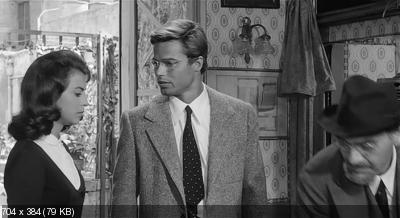
IPNOSI (HYPNOSIS) 1962 (or DUMMY OF DEATH). An ingenious little thriller (directed by Eugenio Martin) which is a nice discovery and also showcases that young Jean Sorel ...(lots more on him at Jean Sorel label)

As usual my pal Melvelvit summarises it nicely over at IMDB: "Hypnotist's assistant Eric Stein (Jean Sorel) is in love with his boss Han's (Massimo Serrato) fiancée Marta (Eleanora Rossi Drago) and secretly sends her roses every opening night. Chris (Götz George), the guy delivering the flowers, is also an amateur boxer down on his luck and takes advantage of an empty dressing room to steal the trio's bankroll but he's caught by Hans who gets knocked out during a brief struggle. Eric finds the unconscious Hans and bashes his head in with a cane before calling for help as the act's ventriloquist dummy, Grog, seems to look on. The police track Chris to his sister Carmen and chase him out onto a ledge where he saves a detective from falling before fleeing into the night. Now hiding out with his boxing buddies, Chris asks Carmen to help him find the real killer while Marta has a breakdown and the only witness to the crime, Grog, disappears...

The next murder comes as a surprise and what follows is reminiscent of PSYCHO with one sibling searching for another who's already dead in a surprisingly suspenseful black & white crime thriller with some supernatural touches. The film's also a forerunner of the Italian horror sub-genre later known as Giallo, some of which even starred that handsome devil Jean Sorel, a little league Alain Delon".
There is also a VERTIGO touch as the tough police guy (Heinz Drach) on the case follows Chris out on to a high window ledge and is left dangling by his fingers as the fugitive goes to rescue him - who will fall? In this case neither as the cop is saved, then knocked out by the fugitive who flees into the night, giving the cop another reason to find him before the real killer does - thats just the first of many thrills and spills here, Sorel shines as another villain, as in his CHAIR DE POULE the next year - Sorel/French labels.

Sabtu, 14 Januari 2012

Ghosts of Rome / Phantoms of Rome, 1961

That's 500 posts done! So, to start the next 500, back to that early '60s Italy for another discovery - FANTASMI A ROMA: PHANTOMS (or GHOSTS) OF ROME, a very amusing comedy which I had never heard of - but there it is on YouTube, all 93 minutes, but I had to have it for myself so have ordered a copy - I can practice my Italian on it as there are no subitles, but that does not stop one's pleasure in watching this great cast at their peaks: Marcello Mastroianni - after LA DOLCE VITA, Vittorio Gassman, the great Edouardo de Filippio, Sandra Milo - and fitting in nicely, Belinda Lee again in one of her last roles.

I think its quite an achievement for Belinda to have become part of the booming Italian movie scene of the late 50s and early 60s - I can't think of any other English actress who did, particularly a glamorous one! not only in the popular peplums (sword and sandal movies) of the time but also comedies likes this and dramas like THE LONG NIGHT OF '43 [reviewed below here...] with the leading Italian actors of the day; and of course she was also in that French LE DRAGUEURS in 1959 (reviewed at Belinda and French labels).

A whimsical fantasy with bite, the story follows Don Annibale (De Filippo), the elderly Prince happily sharing his crumbling palazzo with the ghosts he knows are there of his ancestors. They include Reginaldo (Mastroianni), a two-bit Casanova from the eighteenth century; Flora (Sandra Milo), a doomed romantic from a few generations later who drowned herself after an unfortunate love affair; and Father Bartolomeo (Tino Buazzelli), a greedy monk who died after eating poisoned meatballs intended for rats. The child of 10 ghost is the older brother of De Filippo now in his 70s, who died when De Filippo was 6!


De Filippo soon joins them after an unfortunate accident. His nephew, Federico (Mastroianni again in one of his 3 roles ) turns up with his stroppy girlfriend, Eileen (Belinda Lee), and they intend to sell the palazzo to a developer who wants to build a department store on the site. The ghosts are rather upset with this turn of events, and decide to do their best to stop the developers’ plans. Then they co-opt the ghost of a renaissance artist (Vittorio Gassman) to paint a fresco in the attic, hoping that when it’s discovered the building will be declared a place of historical interest and therefore subject to a conservation order. It is an amusing satire on the booming new Italy of the '60s and the ghosts with their grey pallor and period costumes interact amusingly with the modern cast. Lee is amusing as the brassy girlfriend of the modern Mastroianni while ghostly Marcello, a rather camp Casanova, watches her bathe. . A lot of the comedy comes from the ghosts' attempts to come to grips with the modern life which is increasingly encroaching on their world.

It is nicely photographed by Giuseppe Rotunno (THE LEOPARD, AMARCORD etc. etc.) and has lovely art direction. Director Antonio Pietrangeli’s direction is spot on, and the ghosts are beguiling creatures, for which credit is due to Mastroianni, Gassman, and Milo. This must never have played in London or I would have known about it, but it is a nice discovery now, as I track down more Italian rarities with those players I like. All that's missing here is Vittorio De Sica!

Sabtu, 07 Januari 2012

Another Italian discovery: La Lunga Notte del '43

"I was surpised at how much I enjoyed THE LONG NIGHT OF '43 - it was not at all what I was expecting from a "war movie" (which is what I thought it was) let alone a Belinda Lee movie", so says my friend Melvelvit (from IMDB). It is certainly a big re-discovery for me, as I saw it back in 1967 when I was 21 as an older friend then took me to see it at London's National Film Theatre so many thanks to Guy Tremlett for introducing me to the NFT, - I more or less lived there in the '70s; this film though never showed up anywhere since.

Florestano Vancini made his debut with this 1960 drama, a potent mix of illicit romance and politics, set in Ferrara [Antonioni's home town] as the Fascists tighten their grip to maintain control. Belinda Lee is the wife of a crippled pharmacy owner who spends his time looking out the front window in the apartment above the pharmacy where she works at the till - so he sees too much. At the cinema she meets old flame Gabriele Ferzetti, who is hiding with his family, and they embark on a romance. The personal and the political come to a climax one long night in that December 1943. A wartime atrocity occurs [several prominent locals are rounded up and shot including Ferzetti's father], pushing the two lovers in very different directions. A coda, set in present-day 1960, plays out bitterly but beautifully, jettisoning romance in favor of a grim reminder that the murderers are still among us. It's a remarkable finish to a very compelling film. The leads are excellent; Pier Paolo Pasolini is one of the credited screenwriters, its from a story by Giorgio Bassani, author of THE GARDEN OF THE FINZI-CONTINIS.


The film brought director Vancini a "Best First Work" award at the Venice Film Festival in 1960, and according to my other IMDB pal Jorge, he is now resident in Brazil. Jorge by the way is looking forward to seeing a copy of this.


Gabriele Ferzetti, the same year as L'AVVENTURA, plays another selfish, hollow man here [and he is still working, playing the patriarch in my 2010 favourite I AM LOVE, 2000s label], while Belinda Lee in one of her last roles (before that fatal car crash in 1961) shows what a loss she was - she is a compelling actress here jettisoning most of her glamour - quite a contrast to her Rank Organisation or sword-and-sandal peplum roles. Deglamorised and playing an ordindary Italian woman she is like a young Magnani or Loren, and shows how her career could have gone if fate had been different. It is a very engrossing film with the central massacre sequence being brilliantly staged. One of my re-discoveries of the year then.

It has been interesting too catching up with 2 of Belinda's peplums: the 1957 APHRODITE GODDESS OF LOVE, and her last film CONSTANTINE AND THE CROSS with Cornel Wilde, released in 1962.

Rabu, 21 Desember 2011

Another French rarity: La Fille Aux Yeux D'Or (1961)

A beautiful girl without a name...! WHO was the mysterious rival who kept her captive in a world of luxury?

THE GIRL WITH GOLDEN EYES - This routine film by novice director Jean-Gabriel Albicocco handles the subject of a relationship between women, set in the haute couture world of Paris circa 1960 - so it is naturally tres chic, though the story implies that if a man falls in love with a lesbian she can change her sexual orientation. Loosely based on a novel by Honore de Balzac, a skirt-chasing fashion photographer and "modeliser" who seduces models like the young Francoise Dorleac (while his friends listen as it is tape recorded) meets a mysterious young woman who captures his interest immediately. She is not wholly forthcoming, but after a period of time, he realizes that he is in love with her — she is not just another conquest. It takes awhile before he also realizes that she is the partner of his female associate who is possessive, at the very least.

Paul Guers is the attractive hero (he was in the Bogarde A TALE OF TWO CITIES as well as Demy's BAY OF ANGELS, Demy label), Francoise Prevost is the chic lesbian (she was also in the English PAYROLL with Michael Craig in '61, and the female part of the triangle in Griffi's IL MARE, in 1962 - review at Italian label). The Girl herself is the marvellous Marie Laforet, who dazzled me as Marge in Clements' PLEIN SOLEIL the previous year (see label on that...). Marie sings as well as acts and is still working now.


The drama here escalates as the three characters grapple, and a knife comes into play .... Chabrol did more of the same 6 years later with his popular LES BICHES, the first of his successful series with Stephane Audran. THE GIRL WITH GOLDEN EYES is photographed by the director's father, Quinto Albicocco, and must have been quite daring for its time. My friend Jorge advises that the film's director, Jean-Gabriel Albicocco, abandoned the director's chair in the early 70s to live in Brazil, he fell in love with the country, and opened several art cinemas in Rio and in São Paulo. This is certainly an oddity to see now.