Tampilkan postingan dengan label French. Tampilkan semua postingan

Minggu, 15 Januari 2012

Hypnotised ...

IPNOSI (HYPNOSIS) 1962 (or DUMMY OF DEATH). An ingenious little thriller (directed by Eugenio Martin) which is a nice discovery and also showcases that young Jean Sorel ...(lots more on him at Jean Sorel label)

As usual my pal Melvelvit summarises it nicely over at IMDB: "Hypnotist's assistant Eric Stein (Jean Sorel) is in love with his boss Han's (Massimo Serrato) fiancée Marta (Eleanora Rossi Drago) and secretly sends her roses every opening night. Chris (Götz George), the guy delivering the flowers, is also an amateur boxer down on his luck and takes advantage of an empty dressing room to steal the trio's bankroll but he's caught by Hans who gets knocked out during a brief struggle. Eric finds the unconscious Hans and bashes his head in with a cane before calling for help as the act's ventriloquist dummy, Grog, seems to look on. The police track Chris to his sister Carmen and chase him out onto a ledge where he saves a detective from falling before fleeing into the night. Now hiding out with his boxing buddies, Chris asks Carmen to help him find the real killer while Marta has a breakdown and the only witness to the crime, Grog, disappears...

The next murder comes as a surprise and what follows is reminiscent of PSYCHO with one sibling searching for another who's already dead in a surprisingly suspenseful black & white crime thriller with some supernatural touches. The film's also a forerunner of the Italian horror sub-genre later known as Giallo, some of which even starred that handsome devil Jean Sorel, a little league Alain Delon".
There is also a VERTIGO touch as the tough police guy (Heinz Drach) on the case follows Chris out on to a high window ledge and is left dangling by his fingers as the fugitive goes to rescue him - who will fall? In this case neither as the cop is saved, then knocked out by the fugitive who flees into the night, giving the cop another reason to find him before the real killer does - thats just the first of many thrills and spills here, Sorel shines as another villain, as in his CHAIR DE POULE the next year - Sorel/French labels.

Sabtu, 14 Januari 2012

Ghosts of Rome / Phantoms of Rome, 1961

That's 500 posts done! So, to start the next 500, back to that early '60s Italy for another discovery - FANTASMI A ROMA: PHANTOMS (or GHOSTS) OF ROME, a very amusing comedy which I had never heard of - but there it is on YouTube, all 93 minutes, but I had to have it for myself so have ordered a copy - I can practice my Italian on it as there are no subitles, but that does not stop one's pleasure in watching this great cast at their peaks: Marcello Mastroianni - after LA DOLCE VITA, Vittorio Gassman, the great Edouardo de Filippio, Sandra Milo - and fitting in nicely, Belinda Lee again in one of her last roles.

I think its quite an achievement for Belinda to have become part of the booming Italian movie scene of the late 50s and early 60s - I can't think of any other English actress who did, particularly a glamorous one! not only in the popular peplums (sword and sandal movies) of the time but also comedies likes this and dramas like THE LONG NIGHT OF '43 [reviewed below here...] with the leading Italian actors of the day; and of course she was also in that French LE DRAGUEURS in 1959 (reviewed at Belinda and French labels).

A whimsical fantasy with bite, the story follows Don Annibale (De Filippo), the elderly Prince happily sharing his crumbling palazzo with the ghosts he knows are there of his ancestors. They include Reginaldo (Mastroianni), a two-bit Casanova from the eighteenth century; Flora (Sandra Milo), a doomed romantic from a few generations later who drowned herself after an unfortunate love affair; and Father Bartolomeo (Tino Buazzelli), a greedy monk who died after eating poisoned meatballs intended for rats. The child of 10 ghost is the older brother of De Filippo now in his 70s, who died when De Filippo was 6!


De Filippo soon joins them after an unfortunate accident. His nephew, Federico (Mastroianni again in one of his 3 roles ) turns up with his stroppy girlfriend, Eileen (Belinda Lee), and they intend to sell the palazzo to a developer who wants to build a department store on the site. The ghosts are rather upset with this turn of events, and decide to do their best to stop the developers’ plans. Then they co-opt the ghost of a renaissance artist (Vittorio Gassman) to paint a fresco in the attic, hoping that when it’s discovered the building will be declared a place of historical interest and therefore subject to a conservation order. It is an amusing satire on the booming new Italy of the '60s and the ghosts with their grey pallor and period costumes interact amusingly with the modern cast. Lee is amusing as the brassy girlfriend of the modern Mastroianni while ghostly Marcello, a rather camp Casanova, watches her bathe. . A lot of the comedy comes from the ghosts' attempts to come to grips with the modern life which is increasingly encroaching on their world.

It is nicely photographed by Giuseppe Rotunno (THE LEOPARD, AMARCORD etc. etc.) and has lovely art direction. Director Antonio Pietrangeli’s direction is spot on, and the ghosts are beguiling creatures, for which credit is due to Mastroianni, Gassman, and Milo. This must never have played in London or I would have known about it, but it is a nice discovery now, as I track down more Italian rarities with those players I like. All that's missing here is Vittorio De Sica!

Selasa, 10 Januari 2012

2011 discoveries including more Rene Clement

New movie-going was a bit rare on the ground for me in 2011, as from the summer on I was preparing for and getting over knee replacement surgery, so those movies I saw and reviewed in the first half of 2011 seem remote now: THE KING'S SPEECH, ANOTHER YEAR, UNCLE BOONMEE, MEEK'S CUTOFF, POTICHE, HANNA, etc (2000s label) - in fact my last cinema outing was to the National Film Theatre to see a favourite, Rene Clements' KNAVE OF HEARTS (Gerard Philipe label) on the big screen with a friend back in August. Now however dvds of those movies I wanted to see like THE SKIN I LIVE IN, TREE OF LIFE, DRIVE, WEEKEND, TINKER TAILOR... etc are just starting to come available this month, so reviews on those in due course.

It has been a year of re-discoveries then, like the previous 2 years when I loved the '58 THE SEA WALL, I WAS HAPPY HERE, THAT MAN FROM RIO, Visconti's SANDRA (VAGHE STELLE D'ORSA), THE CHAPMAN REPORT, etc, as per reviews, so the main big discoveries for me this year were the Silvana Mangano ANNA (reviewed below, Mangano label) and the Belinda Lee THE LONG NIGHT OF '43 (ditto, review below), plus those first two Antonioni films on brillaint new divds: CHRONICLE OF A LOVE AFFAIR and THE LADY WITHOUT CAMELIAS (Antonioni label), De Sica's GOLD OF NAPLES (Italian/De Sica/Loren/Mangano labels), Duvivier's CHAIR DE POULE (Jean Sorel/French labels) and now Rene Clements' LES MAUDITS from 1947, along with his 1956 GERVAISE (Clement, French labels).

Silvana Mangano as ANNA; THE LONG NIGHT OF '43

LES MAUDITS (THE DAMNED), 1947: Rene Clement directs an exciting U-boat drama that focuses on a group of Nazis and Nazi sympathizers fleeing in a submarine to South America as World War II draws to a close. There is one reluctant passenger, a doctor (Henri Vidal) kidnapped to tend to Florence Marly who bangs her head and falls into a temporary coma early on. She is the wife of an Italian who tolerates her openly sleeping with a German general, also on board. The ringleader of the group is a vicious, not-so-secret homosexual (Jodest) with a young companion Willy (Michel Auclair), who has his own agenda. Top billed is Marcel Dalio (just Dalio here), but he only appears briefly and has a great death scene. It's an exciting drama, nicely shot capturing the claustrophobia of the submarine - rather an old tin can one here - as the seas rage and the inmates turn on themselves. Henri Vidal was a very attractive guy too - like my other discovery Gerard Philipe he also died young (a heart attack at 40!) in 1959. He is good with Sophia Loren in the Anthony Quinn ATTILA (1954) and with Bardot in the '57 LE PARISIENNE (a treat on YouTube).


LES MAUDITS though is another terrific Rene Clement discovery, along with the engrossing GERVAISE, and THE SEA WALL (THIS ANGRY AGE), PLEIN SOLEIL, LES FELINS, IS PARIS BURNING? etc, as per my previous posts at Rene Clement/French/Alain Delon labels. I already wrote about that favourite KNAVE OF HEARTS (MR RIPOIS) where Clement, five years before the New Wave, was shooting with Gerard Philipe and Joan Greenwood on the streets of London with mobile and hidden cameras. An essential French director then, before the New Wave, but not as old as those '30s masters... Henri Vidal, right.

Next discoveries will be Mangano's RISO AMARO (BITTER RICE) and a batch of Gerard Philipe films: THE CHARTERHOUSE OF PARMA, THE SCARLET AND THE BLACK, POT BOUILLE, LES FEMMES DE NUIT, FANFAN LE TULIPE, LA RONDE, LES LIAISONS DANGEREUSES ... and 2 more Antonioni rarities; plus a handful of Catherine Deneuve films!

Jumat, 23 Desember 2011

Its that time: Christmas in Connecticut or France ?


Some seasonal viewing: a '40s Hollywood christmas tale, or a recent French look at another dysfunctional family during the holiday season ?

CHRISTMAS IN CONNECTICUT: Released the last year of WWII in 1945 (I was born that December), the film is full of subtle patriotic gestures and holiday nostalgia but never sinks to sentimentality. Stanwyck is sexy and sassy as always and is a lot of fun here. She is a cooking columnist who's built up this whole image of living on a small Connecticut farm with husband and baby cooking all these marvelous delicacies. Trouble is she's unmarried, childless, writes her column from her apartment in New York and doesn't know how to boil water. But her writing is a hit with the public. Trouble comes when she's hijacked into cooking a home Christmas dinner for a war hero sailor played by Dennis Morgan who gets to sing a couple of songs as well. Her publisher Sidney Greenstreet likes the idea so well that he invites himself to the dinner. So with borrowed farm, baby, and Reginald Gardiner who'd like to make it real with Stanwyck she tries to brazen it through. S.Z. Sakall adds a great deal of Hungarian malaprop & double-entendre humor in support as Babs' true source of culinary talent & Una O'Connor is hilarious as Gardiner's obnoxious Irish housekeeper. A nice treat then.


A CHRISTMAS TALE: Fancy another French family dysfunction drama? Rather like Assayas's SUMMER HOURS (reviewed at French label), only this one is two and half hours long in the company of some unsumpathetic people as the Vuillard family gathers: parents Junon and Abel, a daughter Elizabeth and her son Paul, Henri and a girlfriend, Ivan, his wife Sylvia and their young sons, and cousin Simon. Six years before, Elizabeth paid Henri's debts and demanded he never see her again or visit their parents' home. Paul, at 16, has mental problems and faces a clinical exam. Junon learns she needs a bone marrow transplant if she's to live beyond a few months: thus the détente bringing all together. Two family members have compatible marrow, but the spats, fights, cruel words, drunken toasts, and somewhat civilized bad behavior threaten all; plus Junon may simply refuse treatment.

It turns out to be an overly long and incredibly talky dysfunctional family drama, by Arnaud Desplechin, led by a chilly Catherine Deneuve as the dying matriarch (such a contrast to her sunny role in the delicious POTICHE (yes, also reviewed recently at French label). She's dying of a rare kind of cancer, and the spectre of that eventuality plus the proximity of brothers and sisters who haven't seen each other for a while and have scores to settle puts everyone in a reflective mood. It rather strikes home if you too have brothers and sisters who do not see or have much contact with each other .... Melvil Poupaud (so effective in Ozon's TIME TO LEAVE - yes, its at the french label) scores as the youngest son.


We also of course have the perennial IT'S A WONDERFUL LIFE with Jimmy Stewart running through Bedford Falls in the snow as he gets his life back, and THE MIRACLE ON 34TH STREET (the Maureen O'Hara-Natalie Wood one) and '54's WHITE CHRISTMAS though how many times can one watch that? and of course theres always those recent christmas perennials like ELF and BAD SANTA and GREMLINS. I was pleased to catch up with favourites Lee Remick and Angela Lansbury in the glutinously sentimental tv film A CHRISTMAS STORY: THE GIFT OF LOVE from 1982, and dear Loretta in CHRISTMAS EVE one of her final roles in '85, as the rich old lady with not long to live re-uniting her family, assisted by ailing Trevor Howard. If that does not get you crying for christmas nothing will ! Perfect viewing anytime though, and particularly at this time of year, is the 1952 film of the play THE HOLLY AND THE IVY, a perfectly British treat with Ralph Richardson, Margaret Leighton and Celia Johnson all sublime (and yes see Richardson, Leighton or Johnson labels for review); and let's not forget the lovely if rarely seen HOLIDAY AFFAIR from 1949 with Janet Leigh having to choose between Robert Mitchum or Wendall Corey! It should be a holiday staple too.

Rabu, 21 Desember 2011

Another French rarity: La Fille Aux Yeux D'Or (1961)

A beautiful girl without a name...! WHO was the mysterious rival who kept her captive in a world of luxury?

THE GIRL WITH GOLDEN EYES - This routine film by novice director Jean-Gabriel Albicocco handles the subject of a relationship between women, set in the haute couture world of Paris circa 1960 - so it is naturally tres chic, though the story implies that if a man falls in love with a lesbian she can change her sexual orientation. Loosely based on a novel by Honore de Balzac, a skirt-chasing fashion photographer and "modeliser" who seduces models like the young Francoise Dorleac (while his friends listen as it is tape recorded) meets a mysterious young woman who captures his interest immediately. She is not wholly forthcoming, but after a period of time, he realizes that he is in love with her — she is not just another conquest. It takes awhile before he also realizes that she is the partner of his female associate who is possessive, at the very least.

Paul Guers is the attractive hero (he was in the Bogarde A TALE OF TWO CITIES as well as Demy's BAY OF ANGELS, Demy label), Francoise Prevost is the chic lesbian (she was also in the English PAYROLL with Michael Craig in '61, and the female part of the triangle in Griffi's IL MARE, in 1962 - review at Italian label). The Girl herself is the marvellous Marie Laforet, who dazzled me as Marge in Clements' PLEIN SOLEIL the previous year (see label on that...). Marie sings as well as acts and is still working now.


The drama here escalates as the three characters grapple, and a knife comes into play .... Chabrol did more of the same 6 years later with his popular LES BICHES, the first of his successful series with Stephane Audran. THE GIRL WITH GOLDEN EYES is photographed by the director's father, Quinto Albicocco, and must have been quite daring for its time. My friend Jorge advises that the film's director, Jean-Gabriel Albicocco, abandoned the director's chair in the early 70s to live in Brazil, he fell in love with the country, and opened several art cinemas in Rio and in São Paulo. This is certainly an oddity to see now.

Senin, 19 Desember 2011

Moreau: Eve & Nathalie Granger


"Welsh writer Tyvian Jones (Stanley Baker) seems to have it all, 60s style: an international best seller, an apartment in Rome, holidays in Venice, a lovely fiancé Virna Lisi, but he is bitter anyway, He meets his existential match in ennui in the mod seductress Eve, played by Jeanne Moreau, who was never more cynical or iconic. Decked out in pointy pumps and heavy eyeliner, listening to Billie Holliday on scratchy LPs as she counts lire and smokes endless packs of cigarettes in strangers’ bedrooms, she is the epitome of frayed glamour. An emotional tyrant, Eve’s cruelly casual maneuvering forces Baker to confront his past – and his weaknesses – as a man and as an artist.

When the Hakim brothers (the notorious producers of PLEIN SOLEIL and BELLE DE JOUR) handed Losey a fat contract and a pulp potboiler by James Hadley Chase, Losey was sure it was his break. After years of tighly budgeted British programmers he hoped EVA would be his ticket to the glossy world of international cinema. But while Losey’s final cut was hailed by critics as equal to his masterpiece THE SERVANT, it was barely released and remains largely unseen after 30 years.Losey disowned the producers’ version, 15 minutes shorter than his own,

Losey’s original version (titled EVE) is now included on dvd, along with the Hakim’s cut. The only surviving print of the original longer version is a Swedish/Finnish release print with Swedish/Finnish subtitles and English dialogue."

Thus went the cover notes on the combinded dvd of EVE and EVA, Joseph Losey's 1962 film set mainly in a wintry Venice. Catching up with it is a fascinating experience now. Losey had done those thrillers like THE SLEEPING TIGER, TIME WITHOUT PITY and the excellent BLIND DATE in 1959 (which I like a lot, as per Losey label), and also THE CRIMINAL and that Hammer oddity THE DAMNED. EVE / EVA is his third with Stanley Baker (who would also co-star with the other Losey regular Dirk Bogarde in ACCIDENT in 1967) and Moreau was at the height of her European stardom. It seems though like a very disjointed odd film - perhaps Losey imagined he too could do an arthouse "sick soul of Europe" movie in the style of Resnais or Antonioni - then the height of intellectual cinema. EVE now though looks and plays like a parody of an early 60s arthouse flick.


Large parts of it seem unintentionally funny, Baker glowering and occasionally hitting Moreau when she provokes him too far - there is no logical ending or conclusion to their story, as it looks like she is going to keep on humiliating him as he keeps coming back for more. One extended sequence fascinates - as Baker and we the audience watch her arrive in her hotel room, she puts on the Billie Holliday record, messes up her hair, lights a cigarette, plays with a cat and finally goes to bed ... then Baker's hands encircle her throat - we wonder briefly if this is real or a fantasy or is he going to finally kill her ... but no, on and on they go. He turns out to be a hollow man - is it really his brother's book he is passing off as his own? How many admirers does she have at all those endless casino nights? There is too a wintry funeral in Venice, anticipating Roeg's DON'T LOOK NOW a decade later. Moreau is a fully realised character in films like LA NOTTE and BAY OF ANGELS, (reviews at Antonioni and Demy labels), and in those Malle and Truffaut films, but here she is merely a cypher whom we do not get to know or understand at all. It points the way to Losey's next film though: THE SERVANT where all his themes of class and decadence would come together perfectly - lots of mirror shots here too. Later after he and Bogarde and Baker had gone as far as they could in British cinema, he teamed up with the Burtons for another pair of oddball films and thence to Europe to Delon and Romy Schneider, Montand (and Moreau again in MR KLEIN). Losey - a martinet and a sadist, according to critic Alexander Walker who knew him well - made so many interesting films which remain fascinating viewing - EVE or EVA certainly is. As I relate in other posts on him, I saw him and the Burtons on stage in 1970 when they were furious that SECRET CEREMONY which had been a box-office disaster had been recut and sold to television!


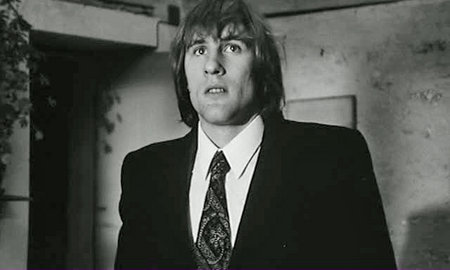
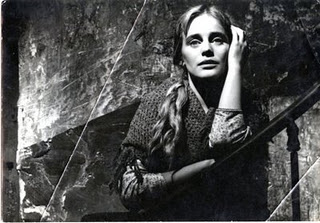
NATHALIE GRANGER - Marguerite Duras's 1975 puzzle film; to some it is a tedious boring mess, others find it a rivetting minimalist drama. I only know after watching it one remains in its unique mood for ages afterwards. It creates an atmosphere of unbearable tension, depression, grief, apprehension, as we watch two women living with some unexplained trauma, in a waiting that never ends (though the film is quite short). Something to do with the mother's anguish over a violent, abnormal daughter who is Nathalie Granger (whom we hardly see). The radio announces that the police are looking for a pair of depraved teenage boy killers on the loose in the local woods. Did they kill someone in the family? Or are they perhaps family members? Do the two women know something about these boys that the police don't? The shots suggest the house and garden is being watched ... A numbed mood separates them from the world outside in front of the house, and the equally claustrophobic garden at the back where they dully burn leaves. Great actresses are denied the opportunity to act, as they sit around staring dully into space or move from room to room in a trance. By bizarre contrast, the young Gerard Depardieu drops in as an awkward vacuum cleaner salesman who tries to sell them a hoover, as they blankly stare at him - it is like something out of Pinter or Beckett commenting on the futility of life.


Moreau - usually the protagonist in her films, seems to do nothing here, she just sits and observes and she is just titled the Other Woman - is she a friend, neighbour, lover of Lucia Bose who seems to be the owner of the house? Good to see Bose again here after catching the re-issues of those first two Antonioni features this year (CHRONICLE OF A LOVE AFFAIR, THE LADY WITHOUT CAMELIAS). A fascinating experiment then in what looks like real time from the ever-fascinating Marguerite Duras (author of THE SEA WALL - both versions of which are reviewed here, Silvana Mangano and Isabelle Huppert labels).

Below, right: Duras with Moreau (who took to directing herself with the fascinating LUMIERE in 1975).


Soon: Moreau with Gerard Philipe in Vadim's 1959 LES LIAISONS DANGEREUSES, and those other Philipe films like THE CHARTERHOUSE OF PARMA, THE SCARLET AND THE BLACK, POT BOUILLE, LES FEMMES DE NUIT, LA RONDE, FANFAN LA TULIPE etc; my favourite KNAVE OF HEARTS and LOVERS OF MONPARNASSE are reviewed at French and Gerard Philipe labels.

Sabtu, 22 Oktober 2011

A '50''s rarity: Gervaise

I must admit I have not read any of the great 19th century French novels (Balzac, Zola etc) where grim malevolent fates lay in store for the likes of Madam Bovary, Therese Raquin, Cousin Bette and of course Gervaise and her daughter Nana .... Maria Schell in Rene Clements' 1956 film GERVAISE delivers a great performance even if she smiles too much as everything conspires against her, but today's feminists would scream at her almost wilful complicitness in her own misfortune and putting up with those useless men who leech off her and not seeing through her rival Viriginie. Clements' film though has the complexity of a greart novel and its a marvellous recreation of 19th century Paris working class life.

Poor Gervaise has a limp, works in the laundry (there is a great extended fight scene), men use and abuse her, she can't be with the real man she loves, the roofer husband has an accident and takes to drink and sinks into a spiral of alcoholism and is soon using up all her money from her shop .... and she too sinks into drink as little Nana runs wild. Strong stuff ! This adaptation of Zola's L'Assommoir is a harrowing and somewhat excruciating tale of working-class Parisians in the mid-19th century. .

The film begins with Gervaise being left by her lover Lantier, leaving her with two young boys and she finds out everyone knew about his cheating. This leads to an extended cat fight when Gervaise is confronted by the other woman's sister, Virginie (Suzy Delair) at the laundry. Unfortunately for Gervaise, this incident has long-term ramifications for her.


Gervaise then marries the roofer Coupeau (Francois Perier) and they have a daughter Nana, but his roofing accident takes all their money, but his steadfast friend Goujet who quietly loves her, loans Gervaise the money to finally open her own laundry shop, but then Virginie returns with her own plan for revenge as she re-introduces Lantier.to the neighbourhood. Coupeau who is sinking into a spiral of drink becomes best friends with Lantier and even invites him to move in with them! Both men are soon using up the profits of Gervaise's shop, the disgusting Coupeau even pawning customers' sheets, while Lantier casually forces himself back on Gervaise whose shame kills her blossoming romance with Goujet. Finally the only solace for Gervaise is to hit the bottle herself.

Schell won the best actress award at the Venice film festival and was soon on her way to Hollywood. Clements had a good run of interesting films I like a lot: KNAVE OF HEARTS with Gerard Philipe in 1954, GERVAISE in '56, THE SEA WALL (or THIS ANGRY AGE) which I have written about here several times (Silvana Mangano label) in 1958 and PLEIN SOLEIL in 1960. His 60s successes included LES FELINS with Delon again and Jane Fonda, and the 1966 IS PARIS BURNING?