Tampilkan postingan dengan label Marcello Mastroianni. Tampilkan semua postingan

Jumat, 27 Januari 2012

Marcello & Romy ! !


Another new Italian discovery: I hadn't realised that Romy Schneider and Marcello Mastroianni had teamed up for FANTASMA D'AMORE in 1981, one of her last films, the year before her death in '82. This is another one we were denied in London, though surely there would have been an audience for it then when the art circuit was still going and international stars like these were still popular ... I have now though seen some scenes from this Dino Risi drama on YouTube and have ordered an Italian only dvd,so a full report in due course ...

Sabtu, 14 Januari 2012

Ghosts of Rome / Phantoms of Rome, 1961

That's 500 posts done! So, to start the next 500, back to that early '60s Italy for another discovery - FANTASMI A ROMA: PHANTOMS (or GHOSTS) OF ROME, a very amusing comedy which I had never heard of - but there it is on YouTube, all 93 minutes, but I had to have it for myself so have ordered a copy - I can practice my Italian on it as there are no subitles, but that does not stop one's pleasure in watching this great cast at their peaks: Marcello Mastroianni - after LA DOLCE VITA, Vittorio Gassman, the great Edouardo de Filippio, Sandra Milo - and fitting in nicely, Belinda Lee again in one of her last roles.

I think its quite an achievement for Belinda to have become part of the booming Italian movie scene of the late 50s and early 60s - I can't think of any other English actress who did, particularly a glamorous one! not only in the popular peplums (sword and sandal movies) of the time but also comedies likes this and dramas like THE LONG NIGHT OF '43 [reviewed below here...] with the leading Italian actors of the day; and of course she was also in that French LE DRAGUEURS in 1959 (reviewed at Belinda and French labels).

A whimsical fantasy with bite, the story follows Don Annibale (De Filippo), the elderly Prince happily sharing his crumbling palazzo with the ghosts he knows are there of his ancestors. They include Reginaldo (Mastroianni), a two-bit Casanova from the eighteenth century; Flora (Sandra Milo), a doomed romantic from a few generations later who drowned herself after an unfortunate love affair; and Father Bartolomeo (Tino Buazzelli), a greedy monk who died after eating poisoned meatballs intended for rats. The child of 10 ghost is the older brother of De Filippo now in his 70s, who died when De Filippo was 6!


De Filippo soon joins them after an unfortunate accident. His nephew, Federico (Mastroianni again in one of his 3 roles ) turns up with his stroppy girlfriend, Eileen (Belinda Lee), and they intend to sell the palazzo to a developer who wants to build a department store on the site. The ghosts are rather upset with this turn of events, and decide to do their best to stop the developers’ plans. Then they co-opt the ghost of a renaissance artist (Vittorio Gassman) to paint a fresco in the attic, hoping that when it’s discovered the building will be declared a place of historical interest and therefore subject to a conservation order. It is an amusing satire on the booming new Italy of the '60s and the ghosts with their grey pallor and period costumes interact amusingly with the modern cast. Lee is amusing as the brassy girlfriend of the modern Mastroianni while ghostly Marcello, a rather camp Casanova, watches her bathe. . A lot of the comedy comes from the ghosts' attempts to come to grips with the modern life which is increasingly encroaching on their world.

It is nicely photographed by Giuseppe Rotunno (THE LEOPARD, AMARCORD etc. etc.) and has lovely art direction. Director Antonio Pietrangeli’s direction is spot on, and the ghosts are beguiling creatures, for which credit is due to Mastroianni, Gassman, and Milo. This must never have played in London or I would have known about it, but it is a nice discovery now, as I track down more Italian rarities with those players I like. All that's missing here is Vittorio De Sica!

Rabu, 19 Oktober 2011

My Voyage to Italy - Martin Scorsese

The perfect documentary for me is Martin Scorsese's MY VOYAGE TO ITALY, I missed this whenever it played on television - did it ever play here in the UK? - but at least the dvd is now avalable. Scorsese of course as an Italian-American is the ideal guide through Italian cinema, he grew up watching these films and they have inluenced his work. It is a given that he would have loved Fellini's I VITELLONI (which I raved about here a while back), it is a major influence on his MEAN STREETS.

This four hour documentary charts the landmark films and directors of the post-war era, including Vittorio de Sica, Luchino Visconti, Federico Fellini, Roberto Rosselini and Michelangelo Antonioni, good to see the usually neglected Rossellini given his due here. Given Marty's wealth of knowledge and infectious passion, just watching this DVD is like attending the best film class. He knows what he’s talking about and gives precise, eloquent descriptions of each movie, using his years of experience in front of a screen as well as behind the camera. Most of all this is 246 minutes of one of the great US directors imparting his passion about some of the most important films of the 20th century. It makes one want to go back to the movies and experience them all over again, particularly Visconti's great SENSO, De Sica's UMBERTO D, and those Fellini and Antonioni masterworks. I VITELLONI for instance remains a timeless pleasure and makes me want to see those other early Fellini films.


If you care about the medium, then it is an essential purchase. Scorsese introduces various segments and through judicious use of clips and an informed, eloquent voiceover takes us on a journey of the following films:

Paisà (1946))
Rome, Open City (1945)
Stromboli (1950)
Europa ’51 (1952)
Shoeshine (1946)
Bicycle Thieves (1948)
Umberto D (1952)
The Gold of Naples (1954)
Ossessione (1943)
La Terra trema (1950)
Senso (1954)
I Vitelloni (1953)
La Dolce Vita (1960)
Voyage to Italy (1954)
L’avventura (1960)
L’eclisse (1962)
(1963)
His focus of course is on classic Italian cinema, but a broader view would encompass the sword-and-sandal peplum films popular in the late 50s/early 60s (like GIANT OF MARATHON, Leone's rather good THE COLOSSUS OF RHODES, THE LAST DAYS OF POMPEII and the Steve Reeves spectaculars, APHRODITE, MESSALINA (see Belinda Lee label), and the giallo thrillers by the likes of Mario Bava and Dario Argento (Jean Sorel label), as well as the popular Loren-Mastroianni films and the delicious comedy films of Monica Vitti, Alberto Sordi et al (BOCCACCIO 70, LE BAMBOLE, LE FATE etc); and those films from the works of Alberto Moravia (TIME OF INDIFFERENCE (Claudia Cardinale label), TWO WOMEN), Georgio Bassani (THE GARDEN OF THE FINZI CONTINI'S) and those intriguing novels by Natalia Ginzburg (DEAR MICHAEL (CARO MICHELE), FAMIGLIA etc). Other strands of Italian cinema I liked are those Lina Wertmuller films like SEVEN BEAUTIES, the Taviani's PADRE PADRONE and new comedies like LOOSE CANNONS (review at Italian label), and the lesser known films by Alberto Lattuada (THE TEMPEST, DOLCI IGNANNI), Mauro Bolognini (GRAN BOLLITO, METELLO), Monicelli etc; Visconti's 1952 BELLISSIMA and 1965 operatic melodrama SANDRA (VAGHE STELLE D'ORSA) being my recent re-dioscoveries. I will have to comment separately on the polarising works of Bertolucci and Pasolini!


I have written about these in more detail at Italian, De Sica, Antonioni, Fellini labels ....plus at labels for Loren, Vitti, Valli, Cardinale, Magnani, Mangano, Mastroianni. We sure love those Italians!

Selasa, 09 Agustus 2011

The Stranger - Luchino Visconti, 1967

THE STRANGER (LO STRANIERO). A very missing movie, this 1967 film of Albert Camus’s “The Stranger” was directed by Luchino Visconti – quite a departure for him from his usual operatic, decorative works, and co-scripted by Visconti's usual writer Suso Cecchi D'Amico. The book was one of those novels one simply had to read back then, and probably still is. It is the bare story of a man who commits a senseless murder, is caught, tried and executed, in Algeria. One of those existentialist works then, as our “hero” Meursault finds life meaningless, he does not care what happens to him or what he does to others, and at his trial much is made of his lack of emotion at his mother’s funeral. Is he a psychopath? We hear his interior monologue.


Marcello Mastroianni gives one of his major performances and is compelling throughout, Anna Karina has the thankless role of the girlfriend. It certainly conjures up the atmosphere of hot, airless rooms and that life lived outside in those hot opressive climates. What I saw was a dubbed copy but that did not detract from the powerful images and mood the film creates. This was made after Visconti's 1965 SANDRA or VAGHE STELLE D'ORSA, that other rare Visconti I re-discovered recently, and is a firm favourite of mine. Visconti was back in operatic mode with his next one, THE DAMNED in ’69.

Kamis, 23 Juni 2011

La Notte, 1961

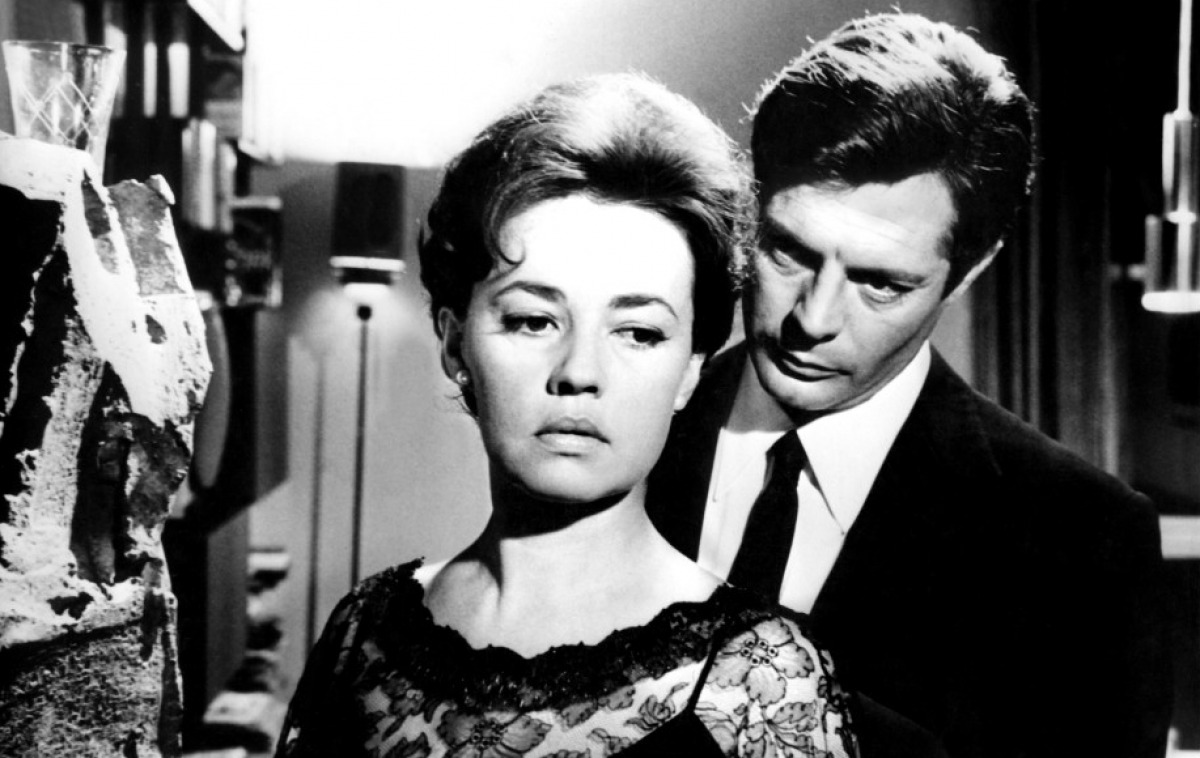
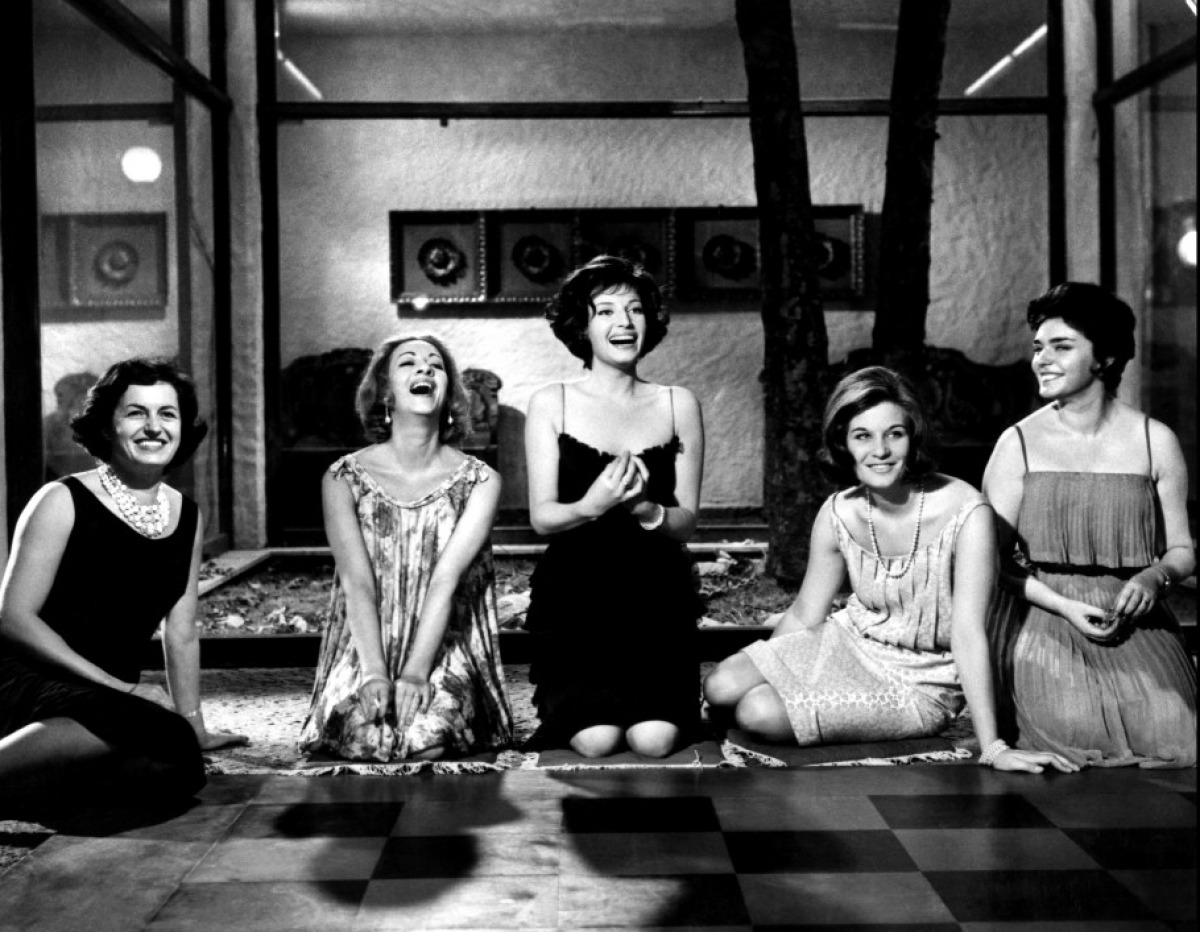
Reviews will be forthcoming on more 'Movies I Love' in due course: JOHNNY GUITAR, A STAR IS BORN, OBSESSION, ALONE ON THE PACIFIC, THE DEAD, LOVE ME TONIGHT, SON OF FURY, A LETTER TO 3 WIVES etc, in the meantime here are a selection of stills from Antonioni's LA NOTTE from 1961, his film after L'AVVENTURA, the second of that 'trilogy' with L'ECLISSE which followed in 1962.
I have written extensively about those other Antonioni's here already, but a second look at LA NOTTE after several decades shows what a rich, complex work it is, and it remains, like JULES ET JIM for instance, the very definition of an arthouse movie. I may have been too young to realise it fully back when I was 20!

Giovanni and Lydia [Marcello and Moreau] are the bored married couple in Milan, visiting their dying friend Tommaso in hospital (director Bernhard Wicki) with Marcello, a well-regarded intellectual whose new book is just out, being tempted by a female patient ..... meanwhile Moreau walks around Milan - her state of mind being conveyed just as vividly as it was when she was walking around Paris in LIFT TO THE SCAFFOLD. Milan here circa 1960 is in a state of flux with new impersonal buildings going up [just like in London in 1966 in BLOW-UP we are aware of the new evolving city around us]. Later, after some soul-less exotic dancing in a nightclub, there is that fashionable party by a rich industralist [who thinks he can buy an intellectual for his team], as again Marcello begins a flirtation with the owner's daughter Valentina, Monica Vitti - in black wig for a change. Valentina though realises this will not go anywhere ... Lydia (Moreau) also flirts with a flirtation but changes her mind. She also rings the hospital and is anguished to hear of Tommaso's death, as they all get wet in the rain by the pool. There is a nice scene between Lydia and Valentina as they dry out, as they understand each other. Later in one of those bleak Antonioni dawns, we follow the couple as she despairingly reads that letter he had written to her when their love was new and fresh - he does not remember writing it. It is an ending as saddening as that of LA DOLCE VITA - or indeed the ending of L'AVVENTURA or BLOW-UP where the photographer simply just vanishes. This slow-to-some film is of course a product of it's time and place, with usual Antonioni screenwriter Tonino Guerra among the collaborators. Hard to believe it is 50 years old - that marvellous photography by Gianni di Venanzo is as fresh and paint.


Moreau, Mastroianni and Vitti all look marvellous here in their early 60s prime. A 'Masters of Cinema' release well worth seeking out.


Sabtu, 09 April 2011

Sophia and Marcello and Vittorio (again)

I have written quite a bit here about the magic created by Sophia Loren and Marcello Mastroianni, particularly when directed by Vittorio De Sica. Vittorio was one of those great larger than life characters (as per my label on him covering his career as both actor and director).

I have been watching some of those early Lorens lately - from BEFORE she went into international and American films: TWO NIGHTS WITH CLEOPATRA (when she was 19 in '53), ATTILA, TOO BAD SHE'S BAD (left) - a delicious '54 comedy where she is conman Vittorio's chatterbox daughter and Marcello is the dim taxi-driver who gets involved with them, it is sheer joy), WOMAN OF THE RIVER - which I liked so much when I saw it as a kid (see labels for reviews), and now finally, the missing link has become available, the 1954 GOLD OF NAPLES - directed by De Sica with Silvana Mangano and Sophia, who was just rising to stardom here. I shall be looking forward to seeing that shortly, review to follow.


Sophia was still only 23 when so-starring with the likes of Alan Ladd (BOY ON A DOLPHIN), John Wayne (LEGEND OF THE LOST), etc. Her 10 American films from 1957-60 are mainly fluff but HOUSEBOAT with Grant, THE BLACK ORCHID and the Cukor western HELLER IN PINK TIGHTS all have their charms. She is more animated back in Italy, Naples to be precise, with Clark Gable in IT STARTED IN NAPLES [his second last film] with Vittorio in support - then in 1960 came the international hit of TWO WOMEN - Vittorio directs, Belmondo is in support and Loren at 25 plays the mother of a 14 year old daughter, gets the Academy Award (the first actress to do so in a foreign language) and goes on to those other interesting European films as well as headlining epics like FALL OF THE ROMAN EMPIRE or OPERATION CROSSBOW. The De Sica ones are rather choice though: YESTERDAY TODAY AND TOMORROW in '64, I particularly like the Naples story where she is the endlessly pregnant wife of Marcello, being pregnant keeps her out of jail, until poor Marcello cannot perform any more. MARRIAGE ITALIAN STYLE in 1965 is terrific as well, from the great Italian play "Filumena". SUNFLOWER in 1970, set partly in Russia, though was a return to old-fashioned melodrama and just did not work at all and was very dated in that interesting period of cinema pushing new boundaries.


De Sica also popped up in other Loren vehicles such as THE MILLIONAIRESS as he continued acting in various movies like THE MONTE CARLO STORY (1957 with Dietrich), NERO'S LOST WEEKEND with Alberto Sordi, Brigitte Bardot and Gloria Swanson (more on this next week) and various movies like THE ADVENTURES OF MOLL FLANDERS and ANDY WARHOL'S DRACULA. Like that other larger than life director who also acted John Huston, Vittorio needed to work to fund his lavish gambling habit. His last big commercial success as director though was the 1971 THE GARDEN OF THE FINZI-CONTINI from the Giorgio Bassani novel. His last directing effort with Loren (and Richard Burton) THE VOYAGE in 1974 was also a return to old fashioned cinema and did not seem to be released for a long time, a dvd was finally issued a couple of years ago here in the UK.


Marcello's LA LOI in '59 has been a recent discovery of mine (as per review) and then of course he began his long Fellini assocation. He and Sophia had one last co-starring outing as part of Altman's not entirely successful PRET-A-PORTER (left) in '94. Vittorio died in 1974, and Marcello in 1996; Sophia now 76 and looking as sensational as ever will hopefully have a few more good roles, after the damp squib that was NINE. It is one of the great international careers, comparable to Taylor's.
Here's an interesting snippit: Back in 1961 when EL CID first opened in New York they wanted to have Heston as sole name above the title (this was after BEN HUR of course) but Loren's contract guaranteed equal billing, it went to court (I remember reading about in the papers) and the first ads had to be pulled to give her equal billing - which probably didn't endear her to Heston then!