Tampilkan postingan dengan label Jacques Demy. Tampilkan semua postingan

Senin, 19 Desember 2011

Moreau: Eve & Nathalie Granger


"Welsh writer Tyvian Jones (Stanley Baker) seems to have it all, 60s style: an international best seller, an apartment in Rome, holidays in Venice, a lovely fiancé Virna Lisi, but he is bitter anyway, He meets his existential match in ennui in the mod seductress Eve, played by Jeanne Moreau, who was never more cynical or iconic. Decked out in pointy pumps and heavy eyeliner, listening to Billie Holliday on scratchy LPs as she counts lire and smokes endless packs of cigarettes in strangers’ bedrooms, she is the epitome of frayed glamour. An emotional tyrant, Eve’s cruelly casual maneuvering forces Baker to confront his past – and his weaknesses – as a man and as an artist.

When the Hakim brothers (the notorious producers of PLEIN SOLEIL and BELLE DE JOUR) handed Losey a fat contract and a pulp potboiler by James Hadley Chase, Losey was sure it was his break. After years of tighly budgeted British programmers he hoped EVA would be his ticket to the glossy world of international cinema. But while Losey’s final cut was hailed by critics as equal to his masterpiece THE SERVANT, it was barely released and remains largely unseen after 30 years.Losey disowned the producers’ version, 15 minutes shorter than his own,

Losey’s original version (titled EVE) is now included on dvd, along with the Hakim’s cut. The only surviving print of the original longer version is a Swedish/Finnish release print with Swedish/Finnish subtitles and English dialogue."

Thus went the cover notes on the combinded dvd of EVE and EVA, Joseph Losey's 1962 film set mainly in a wintry Venice. Catching up with it is a fascinating experience now. Losey had done those thrillers like THE SLEEPING TIGER, TIME WITHOUT PITY and the excellent BLIND DATE in 1959 (which I like a lot, as per Losey label), and also THE CRIMINAL and that Hammer oddity THE DAMNED. EVE / EVA is his third with Stanley Baker (who would also co-star with the other Losey regular Dirk Bogarde in ACCIDENT in 1967) and Moreau was at the height of her European stardom. It seems though like a very disjointed odd film - perhaps Losey imagined he too could do an arthouse "sick soul of Europe" movie in the style of Resnais or Antonioni - then the height of intellectual cinema. EVE now though looks and plays like a parody of an early 60s arthouse flick.


Large parts of it seem unintentionally funny, Baker glowering and occasionally hitting Moreau when she provokes him too far - there is no logical ending or conclusion to their story, as it looks like she is going to keep on humiliating him as he keeps coming back for more. One extended sequence fascinates - as Baker and we the audience watch her arrive in her hotel room, she puts on the Billie Holliday record, messes up her hair, lights a cigarette, plays with a cat and finally goes to bed ... then Baker's hands encircle her throat - we wonder briefly if this is real or a fantasy or is he going to finally kill her ... but no, on and on they go. He turns out to be a hollow man - is it really his brother's book he is passing off as his own? How many admirers does she have at all those endless casino nights? There is too a wintry funeral in Venice, anticipating Roeg's DON'T LOOK NOW a decade later. Moreau is a fully realised character in films like LA NOTTE and BAY OF ANGELS, (reviews at Antonioni and Demy labels), and in those Malle and Truffaut films, but here she is merely a cypher whom we do not get to know or understand at all. It points the way to Losey's next film though: THE SERVANT where all his themes of class and decadence would come together perfectly - lots of mirror shots here too. Later after he and Bogarde and Baker had gone as far as they could in British cinema, he teamed up with the Burtons for another pair of oddball films and thence to Europe to Delon and Romy Schneider, Montand (and Moreau again in MR KLEIN). Losey - a martinet and a sadist, according to critic Alexander Walker who knew him well - made so many interesting films which remain fascinating viewing - EVE or EVA certainly is. As I relate in other posts on him, I saw him and the Burtons on stage in 1970 when they were furious that SECRET CEREMONY which had been a box-office disaster had been recut and sold to television!


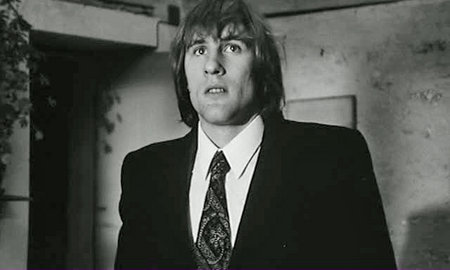
NATHALIE GRANGER - Marguerite Duras's 1975 puzzle film; to some it is a tedious boring mess, others find it a rivetting minimalist drama. I only know after watching it one remains in its unique mood for ages afterwards. It creates an atmosphere of unbearable tension, depression, grief, apprehension, as we watch two women living with some unexplained trauma, in a waiting that never ends (though the film is quite short). Something to do with the mother's anguish over a violent, abnormal daughter who is Nathalie Granger (whom we hardly see). The radio announces that the police are looking for a pair of depraved teenage boy killers on the loose in the local woods. Did they kill someone in the family? Or are they perhaps family members? Do the two women know something about these boys that the police don't? The shots suggest the house and garden is being watched ... A numbed mood separates them from the world outside in front of the house, and the equally claustrophobic garden at the back where they dully burn leaves. Great actresses are denied the opportunity to act, as they sit around staring dully into space or move from room to room in a trance. By bizarre contrast, the young Gerard Depardieu drops in as an awkward vacuum cleaner salesman who tries to sell them a hoover, as they blankly stare at him - it is like something out of Pinter or Beckett commenting on the futility of life.


Moreau - usually the protagonist in her films, seems to do nothing here, she just sits and observes and she is just titled the Other Woman - is she a friend, neighbour, lover of Lucia Bose who seems to be the owner of the house? Good to see Bose again here after catching the re-issues of those first two Antonioni features this year (CHRONICLE OF A LOVE AFFAIR, THE LADY WITHOUT CAMELIAS). A fascinating experiment then in what looks like real time from the ever-fascinating Marguerite Duras (author of THE SEA WALL - both versions of which are reviewed here, Silvana Mangano and Isabelle Huppert labels).

Below, right: Duras with Moreau (who took to directing herself with the fascinating LUMIERE in 1975).


Soon: Moreau with Gerard Philipe in Vadim's 1959 LES LIAISONS DANGEREUSES, and those other Philipe films like THE CHARTERHOUSE OF PARMA, THE SCARLET AND THE BLACK, POT BOUILLE, LES FEMMES DE NUIT, LA RONDE, FANFAN LA TULIPE etc; my favourite KNAVE OF HEARTS and LOVERS OF MONPARNASSE are reviewed at French and Gerard Philipe labels.

Kamis, 27 Oktober 2011

"The Throb of Manhattan"

ITS ALWAYS FAIR WEATHER, 1955, may well be my very favourite musical (after A STAR IS BORN and THE BANDWAGON of course) - it and those sophisticated musicals from 1957 [LES GIRLS, FUNNY FACE, SILK STOCKINGS, THE PYJAMA GAME, bits of PAL JOEY] are my perennial favourites, ever since I saw them as a child at Sunday afternoon matinees - BRIGADOON was another but it it not quite in that league, but I prefer them to the over-hyped SINGING IN THE RAIN or AN AMERICAN IN PARIS both of which show Kelly at his most grating (of course, as per Musicals label, I also love ON THE TOWN, MY SISTER EILEEN, KISS ME KATE, SWINGTIME, GYPSY, LES DEMOISELLES DE ROCHEFORT among others...)

Good to see that ITS ALWAYS FAIR WEATHER is being revived by the London National Film Theatre in their season on MGM musicals - it cries out to be seen on widescreen, using as it does, multiple images when our 3 wartime buddies reflect on their lives now. It seems to have been a troubled shoot, co-directors Kelly and Stanley Donen fell out, Kelly and Charisse don't have any number together, she has one marvellous dance number "Baby You Knock Me Out" at the gym (where, as Pauline Kael put it, "Cyd Charisse is benumbed until she unhinges those legs") wearing that terrific Helen Rose ensemble, and Gene has the very inventive roller-skate number and of course when the 3 guys dance with the dustbin lids, so it is all very innovative, just as original musicals were dying, it was mainly films of Broadway shows after this.

It is the perfect mid-century story of 3 wartime buddies meeting up 10 years later in 1955 and realising that they don't like each other much now, and indeed Kelly and Dailey don't much like themselves either. Gene is mixing with hoods and managing a dumb boxer, while Dan Dailey has risen to "Executive Vice-President" level in advertising and is sick of the advertising game as he lets rip in his terrific solo number "Advertising-wise". Cyd Charisse is the television researcher who stumbles across the 3 wartime buddies and realises their reunion is ideal for her television show "Midnight with Madeline" for "The Throb of Manhattan" spot where saccharine stories are featured. This is the early days of live television and the movie is a splendid satire on those artificial tv hostesses like Madeline and her diva tantrums. Dolores Gray is stupendous here, and has one of the best numbers ever "Thanks a lot but no thanks" which is a delirious treat with that ritzy gown and that killer line:"I've got a man who's Clifton Webb and Marlon Brando combined"!. Then hood Jay C Flippen and his goons invade the studio where the live broadcast is being made, as they are after Gene who has thrown the fight once he realised his boxer has been bribed to lose it. Cyd gets the hoods to confess on live air, Madeline has a hit show, the 3 buddies realise they are still friends after all. It's a perfect conclusion as Cyd joins Gene and the the guys back at the bar where they vowed to meet up 10 years previously.


Choreographer Michael Kidd is ideal as the family man, Dailey has one of his best roles (apart from his father in THERE'S NO BUSINESS LIKE SHOW BUSINESS), Cyd and Gene sparkle as they spar with each other, and Dolores steals the show. What's not to love? It is a dark, sometimes bitter take on ON THE TOWN a decade later as the 3 buddies meet again - by 1955 though Sinatra had gone on to solo projects and was "difficult" and Jules Munchin was not a name enough. Produced of course by Arthur Freed, with songs by Andre Previn, script by Comden and Green; perfect entertainment then, but see the widescreen version, not panned and scanned! The DVD includes a fascinating 'Making-Of' chronicling the fallout between Kelly and Donen, and several out-takes including a terrific inventive (that word again) deleted number between Kelly and Charisse "Love is Nothing But a Racket" which has been unseen for far too long, and Michael Kidd's solo spot with some kids, but Gene did not want that included, after his number with kids in AN AMERICAN IN PARIS! Essential stuff then.

I met Gene at a recording of an interview of his for the BBC in 1975 - Donen of course went on to direct several of my enduing favourites: those Audrey Hepburn films like TWO FOR THE ROAD and CHARADE, Kendall in ONCE MORE WITH FEELING, Peck and Sophia ideal in ARABESQUE, and the marvellous BEDAZZLED with Pete and Dud and Eleanor Bron in 1967. We won't mention STAIRCASE or LUCKY LADY!

Rabu, 16 Februari 2011

More French flicks ....


L’HOMME DE RIO – Back when I was 19 in 1965 I saw THAT MAN FROM RIO as a supporting feature. I have no idea now what the main movie was but I never forgot the deliciously zany French film dubbed into English, where Jean-Paul Belmondo was That Man (a soldier on leave) on the trail of his kidnapped girlfriend Francoise Dorleac and of course some stolen treasure, as the action heads from Paris to the Amazon jungles, it is surely an Indiana Jones before its time. This Philippe De Broca confection was a real movie – fun, exciting, romantic, brash, it is simply one of the best adventure capers ever made (and a perfect 60s movie), so I cannot understand how I have had to wait until now see it again (as it never shows here in the UK) and the version I now have is in French with sub-titles! There is also a great soundtrack with lots of Brazilian sounds – the bossa nova was really taking off in the mid-60s. This was filmed at just the right time just as all things South American were taking off.

The Tom Cruises and Gerard Butlers of the current filmworld should study this and see what a real caper movie is like and without those phoney-looking CGI stunts as the charismatic Belmondo goes on that rollercoaster ride from Rio to the jungles and the bright empty spaces of the new Brasilia! Belmondo is at his peak here, as is Dorleac as the capricious girlfriend who has a lovely sequence dancing on the beach - she's a carioca! There is also of course the obligatory cute streetwise kid (with an idyllic beach shack) who helps our hero evade the goons with guns, and some terrific airplane stunts ... and Adolfo Celi is splendidly over-ripe as usual. So from now on whenever I am depressed I shall play this and be flying down to Rio! No wonder there are raves on its comments page on IMDB. L'HOMME DE RIO is now officially 'A Movie I Love' and Belmondo is my new hero!


My friend Daryl has commented: How strange release patterns are: in the US, THAT MAN FROM RIO was a big deal indeed, winning the New York Film Critics Circle award for Best Foreign Film and running in the first-run art houses for almost a year!

LES AMANTS DE MONTPARNASSE – 1958 movie about the artist Modigliani, directed by Jacques Becker and dedicated to Max Ophuls. It follows the last year of Modigliani (or Modi as everyone refers to him) and is the usual story of the artist starving in a garret, set here in 1919 [in the Montparnasse area of Paris]. One does not have much patience with him though as Modi is hellbent on drinking himself to death and treats everyone – not least the women in his life – badly. Lilli Palmer is the rich Beatrice who does not mind too much, in fact she quite likes being slapped around, while young Anouk Aimee is Jeanne, the well to do girl who gives up everything for Modi, her father even locks her in her room to keep her away from him. Modi is Gerard Philipe, that pre-Delon/Belmondo heartthrob who died young in 1959.


I have only come lately to the cult of Philipe, having sought out his 1954 KNAVE OF HEARTS (MONSEIUR RIPOIS) for Joan Greenwood’s performance, and then getting Ophuls’ LA RONDE and the terrific FANFAN LA TULIPE. This builds to a chilling climax though as the ailing artist is reduced to selling his sketches to indifferent café diners, while being observed by Morel (Lino Ventura) a collector who knows that the works of a dead Modigliani will be worth more than those of a living artist. We watch fascinated as Modi finally collapses, stalked by Morel, who after the artist has died at the hospital rushes to the garret and begins buying the paintings from the unsuspecting Jeanne. We see glimpses of the paintings and that distinctive Modigliani style, it reminded me I used to have some reproductions pinned to my wall when I was a teenager. An interesting curiosity then - it is all very French, and just before that New Wave took off....


THE SLEEPING CAR MURDER - Costa-Gavras's 1965 French flick, a routine thriller, but expertly done, COMPARTIMENT TUEURS (it's original title) follows the police investigation of a murder in the sleeping car of the train. Then the other occupants are killed off one by one as weary police chief Yves Montand (with a head cold) essays all those cops who followed in tv series and movies as he tracks down the suspects. It is pretty much a family affair for the Montands as Simone Signoret has a showy role and her daughter Catherine Allegret is also on board. She gets involved with Jacques Perrin and others include Charles Denner, Michel Piccoli and Jean-Louis Trintignant. A very French affair then, but just as effective dubbed, in gleaming black and white. I have now also got Costa-Gavras's 'Z' to have another look at, I have not seen it since its release back in 1970, it was one of those prime thrillers of its era, 40 years ago, and no doubt still is very effective.

Also to be seen now, goodness knows when, are two Claude Chabrol box sets, 14 films in all!, along with his LA CEREMONIE. We saw a lot of Chabrols back in the late '60s and into the '70s, when he was doing that brilliant series of thrillers with his then wife, the marvellous Stephane Audran, particularly LE BOUCHER and LA FEMME INFIDELE and the brilliant THE BEAST MUST DIE etc. I liked that comic thriller in bright Greek sunlight LE ROUTE DE CORINTH (with Seberg and Ronet), Romy Schneider and Steiger in INNOCENTS WITH DIRTY HANDS (a valentine to Romy really), and that good Canadian one with Donald Sutherland BLOOD RELATIVES, so I really must find time to go back and see all those ones I missed like those with Isabelle Huppert (VIOLETTE NOZIERE, MADAME BOVARY). Chabrol was nothing if not prolific, good though to see how highly regarded he is now. The same applies to Louis Malle and Jacques Demy.

Next: I need to go back and re-visit those Malles like LIFT TO THE SCAFFOLD, ZAZIE DANS LE METRO, VIVA MARIA and my favourite back then, LE FEU FOLLET where the very under-rated Maurice Ronet gives that staggering performance. The later Demy films did not make it to London, so one shall have to seek them out, but I have covered those early ones I like so much on here, Demy label. There are also some late Truffauts to see: THE LAST METRO and VIVEMENT DIMANCHE (FINALLY SUNDAY) with the adorable Fanny Ardant, and that amusing Hitchock pastiche THE BRIDE WORE BLACK with Moreau (my favourite Truffaut though has to be THE HISTORY OF ADELE H, with Isabelle Adjani, a movie that overwhelmed me at the time, 1976).
I also want to see (and re-see) those Francois Ozon's I missed: the camp extravaganza 8 WOMEN, the grim TIME TO LEAVE, Charlotte Rampling in UNDER THE SAND, etc. And I have just discovered a Jean-Pierre Melville set of 6 (more on that later). Back though to Chabrol....


It is an absolute pleasure seeing LA FEMME INFIDELE again, that perfect late '60s setting, as the loving jealous husband Michel Bouquet begins to suspect the wife he loves so much is having an affair during her frequent trips to Paris. He soon discovers the truth and calls on the lover, Maurice Ronet (once again). It is a brilliant scene as the men talk, the lover feeling awkward and guilty, the husband not know what to do - but a casual remark of the lover suddenly leads to blind anger ... he thinks he has covered his tracks, and the ideal domestic life with their son resumes - but of course, being Chabrol, those police and detectives keep calling and finding out more details. It is all impeccably done with those lovely circular camera movements as we circle the husband and wife as they both realise the trap they are in. She finds the evidence and cooly destroys it as she is now back in love with her husband. Stephane Audran is of course so divinely cool and poised and attractive here. Classic French cinema then. And there are those Delon and Varda boxsets to explore...her CLEO FROM 5 TO 7 was one of my discoveries of last year.

Jumat, 07 Januari 2011

2010 - best and worst .....


We are a little behind here at the Movie Projector - I only saw UNCLE BOONMEE at the cinema yesterday, and the dvd of BEACHES OF AGNES has been sitting unwatched on a shelf for the last 9 or so months, but they are both my films of the year in that they are totally unlike anything else and left one dazed and exhilerated. Cinema then in a nutshell....

One knows one is leaving usual cinema terrain as the Thai UNCLE BOONMEE WHO CAN RECALL HIS PAST LIVES unspools: a water buffalo tethered to a tree at night breaks free and trots away and then stops for a while as we examine this strange animal as it takes in the night scene being at one with nature, then its owner enters, picks up its rope and takes it back. What is the beast thinking? Is it willing to go back? Then we join Boonmee's placid sister and his nephew as they travel to his bee farm to look after him in his final days as he is dying of a kidney disease. The pace seems very slow at first with shots held for longer than usual but then one falls into it. Nobody seems surprised when Boonmee's late wife Huay who has been dead for 19 years materialises at the dinner table and they talk to her. Boonmee, who is philosophical about his impending demise as he has lived before several times, asks her how he will find her in heaven: Huay replies: "Heaven is over-rated, there's nothing there. And anyway ghosts don't associate with places, they associate with people. We'll find each other."

Boomnee it seems has the ability to range over his past lives as he comes to the end of his current one, aided by the spirits of the forest who also include his son Boonsong who has changed into a weird creature with red eyes [from having mated with monkey spirits]. Then we come to the mesermising sequence with the Princess and the catfish, set against a stunning waterfall which one could sit and watch for hours - as the Princess disrobes and enters the water where the catfish is waiting for her... perhaps the water buffalo or the princess or the catfish are also past (or future) lives of Boonmee? - as apparantly his other lives can be male or female, human or animal.... (the connectedness of things?)


People who are not prepared for it will be left confounded but others will leave the cinema stunned at the experience of it all. It is therefore an experience rather than a conventional movie. Apichatpong Weerasethakul tells a story that doesn't ask or need to be understood. As he awaits his death, Boonmee, Huay, Jen, and Tong visit a cave with white sand floors where Boonmee reveals that this was the place he was first born. He then dies there. For me maybe the movie should have stopped here - there is a coda showing their life afterwards as they sit around a hotel room and the monk Tong takes a shower, but this really, after what went before, is rather like watching paint dry and seems superfluous. Apart from that its depiction of the enduring relationship between Boonmee and Huay, and the in images of a dying man comforted by family and friends, the film offers an experience of the permanence of love.

The permanence of love is also really what THE BEACHES OF AGNES is all about, as Fench director Agnes Varda now in her 80s makes the most unusual documentary ever about looking back over one's life and work. Her fascination with beaches comes to the fore as she and her friends (like Jane Birkin) arrange mirrors on the beaches as she recollects her parents and childhood and early career and her marriage to Jacques Demy and the films they made and the actors and friends they knew. At the end she is surrounded by her children and grand-children and she and they are the most delightful company. This is the most perfect way to get old and still remain fascinating and interested in everything. We experience the loss of Demy [who like Boonmee was nursed by loved ones], the courtyard where he and Agnes worked on their projects, clips from their movies, that New Wave era, their time at the centre of the counterculture in California in the late '60s (where they discovered Harrison Ford, but couldn't use him in Jacques' MODEL SHOP as he was not considered actor material by the studio!; Agnes was making LIONS LOVE with Viva and the HAIR creators).


As IMDB puts it: "Agnès Varda explores her memory - growing up in Belgium, living in Sète, Paris, and Noirmoutier, discovering photography, making a film, being part of the New Wave, raising children with Jacques Demy, losing him, and growing old. She explores her memory using photographs, film clips, home movies, contemporary interviews, and set pieces she designs to capture a feeling, a time, or a frame. Shining through each scene are her impish charm, inventiveness, and natural empathy. How do people grow old, how does loss stay with them, can they remain creative, and what do they remember?" (I have already written extensively here, as per French label, on Demy and Varda).

I saw Varda's LE BONHEUR when I was 19 in '65 and it was one of those films that made a very strong impression, so its been good to finally see it again now that there are Varda box-sets, and to finally discover her CLEO FROM 5 TO 7, with its delightful picture of Paris in the early 60s. That is one of my discoveries of the year, as below:

The 2000s label covers my other films of 2010 as per reviews of A SINGLE MAN, THE GHOST, I LOVE YOU PHILIP MORRIS, THE HURT LOCKER, INGLORIOUS BASTERDS etc. I shall be turning to I AM LOVE and TOY STORY 3 shortly, 44 INCH CHEST remains a terrific comedy ensemble piece of Winstone, Hurt, McShane, Wilkinson; IT'S COMPLICATED and LETTERS TO JULIET are the best of the romcoms; disappointment of the year has to be NINE and disaster of the year SEX AND THE CITY 2 (which is not worth mentioning). Polanski's GHOST is thriller of the year but surely the East Coast of America is not as bleak as depicted here (shot as it was in Europe) while McGregor (for his brilliance in the Carrey movie) and Colin Firth are actors of the year; actress = Tilda Swinton. Firth is no longer a lightweight actor and after also finally seeing McGregor in Greenaway's THE PILLOW BOOK one has to be amazed at his daring and taking of risks.

Of the late 2010 releases as we go into 2011 I shall be looking forward to catching THE KING'S SPEECH (with that great cast including Claire Bloom), Mike Leigh's return with ANOTHER YEAR, 127 HOURS, THE KIDS ARE ALRIGHT etc.

Television (here in the UK at any rate) served up some treats: classy drama (or 'heritage tv') is back with Maggie Smith leading the ensemble in DOWNTON ABBEY, the revived UPSTAIRS DOWNSTAIRS with a splendid Eileen Atkins taking charge, classy thrillers like SPOOKS and SHERLOCK and the splendid film of Nigel Slater's food memoir TOAST, while Tom Hollander scored with his comedy series REV and Rufus Sewell as the Italian detective ZEN.


My discoveries of the year are: Visconti's 1965 SANDRA (or OF A THOUSAND DELIGHTS), Clements 1957 THE SEA WALL (THIS ANGRY AGE) (I shall be seeing the recent version shortly), BLONDE IN BLACK LEATHER (a throwaway 1975 Italian comedy for the domestic market with Vitti and Cardinale having fun) - see Italian label, Ozon's UNDER THE SAND with Charlotte Rampling (to be reviewed), Varda's CLEO FROM 5 TO 7 and a brace of early Dirk Bogarde's: APPOINTMENT IN LONDON and CAST A DARK SHADOW where he is delightfully spivvy bumping off older wife Mona Washboure and having designs on wicked lady Margaret Lockwood and splendid Kay Walsh!

2011's revivals will include that early Fellini boxset and all those Chabrols to revisit (2 boxsets!), and Gerard Philipe (as Modigliani) in LES AMANTS DE MONTPARNASSE with Anouk Aimee and Lilli Palmer, as well as some other yet-unseen Romy Schneider films.

(Previous years' discoveries here at the Projector included Cukor's THE CHAPMAN REPORT, Jean Seberg in MOMENT TO MOMENT, Lana's LOVE HAS MANY FACES, Sarah Miles in I WAS HAPPY HERE, Lilli Palmer and Jean Sorel in ADORABLE JULIA, Demy's LES DEMOISELLES DE ROCHEFORT (on dvd and on the big screen), THE OPPOSITE SEX, ALL FALL DOWN, early Loren in TOO BAD SHE'S BAD and WOMAN OF THE RIVER, ABDULLA THE GREAT (Kay Kendall's missing 1955 film), Mangano in MAMBO and THE TEMPEST, Minnelli treats DESIGNING WOMAN and THE RELUCTANT DEBUTANTE, Linda Darnell in THIS IS MY LOVE (1954) and the 1954 KNAVE OF HEARTS as per reviews.
Right: I WAS HAPPY HERE, 1966 / below: ADORABLE JULIA: Jean Sorel and Lilli Palmer in Trafalgar Square, 1962